
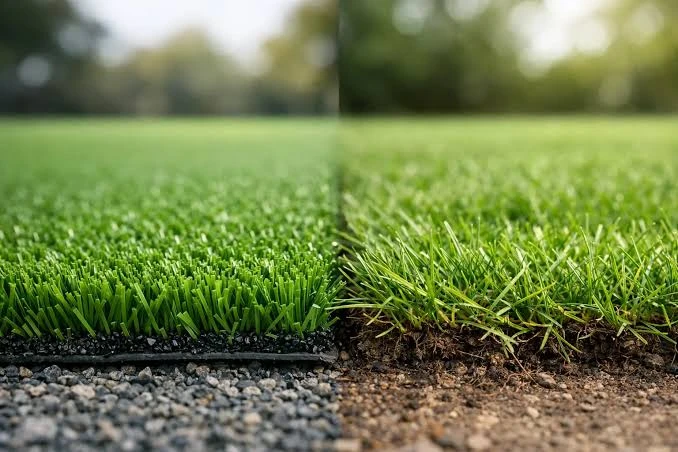
Your lawn says a lot about your home, but the real story happens underneath what you see. Watering schedules, fertilizer bills, muddy patches after rain, and weekends lost to mowing add up fast. At the same time, artificial grass has matured enormously over the past decade, and not everyone realizes how different modern synthetic turf is from the scratchy carpet that showed up at backyard barbecues in the 1980s. This article breaks down both options honestly, comparing them on the factors that actually matter to homeowners: cost, water use, maintenance demands, environmental impact, safety, and long-term performance.
The Real Cost of Each Option Over Time
Upfront costs often dominate the conversation, but they tell only part of the story. Natural grass seed or sod installation is relatively affordable. Depending on the region and grass variety, seeding a 1,000-square-foot lawn can cost as little as a few hundred dollars, while sodding the same area often runs between $800 and $2,000 including labor. Artificial turf installation is a bigger initial investment, typically ranging from $5 to $20 per square foot installed, depending on the turf quality, infill material, and any ground preparation required.
Where the math shifts is in ongoing costs. Natural grass requires regular watering, fertilizing, pest control, aeration, and mowing. The Water Research Foundation has estimated that outdoor irrigation accounts for nearly 30 percent of household water use nationally, and a significant chunk of that goes to lawns. Add in professional lawn care or equipment maintenance costs, and a natural lawn can easily cost $500 to $1,500 or more per year depending on the yard size and local service rates. Artificial grass, by contrast, has negligible ongoing costs once installed. Occasional rinsing, brushing the fibers upright, and spot cleaning is about all it needs.
A useful way to think about it: most high-quality artificial turf products carry warranties of 8 to 15 years and can last considerably longer with basic care. If you spread the installation cost across 12 to 15 years and subtract the annual maintenance savings, synthetic turf often reaches cost parity or comes out ahead over a full ownership period, especially in regions where water is expensive or landscaping labor is not cheap.
| Cost Category | Natural Grass (Annual Est.) | Artificial Grass (Annual Est.) |
| Water | $200 – $700+ | Minimal (occasional rinse) |
| Fertilizer & Pesticides | $100 – $300 | $0 |
| Mowing (service or equipment) | $300 – $800 | $0 |
| Aeration & Overseeding | $100 – $250 | $0 |
| Repairs & Patching | Variable | Rare, minor |
| Total Estimated Annual Cost | $700 – $2,050+ | $50 – $150 |
Water Use and Environmental Considerations
Water conservation is one of the strongest arguments for artificial grass, particularly in drought-prone states like California, Arizona, Nevada, and Texas. The Southern Nevada Water Authority has reported that replacing 1 square foot of natural grass with a water-efficient alternative saves roughly 55 gallons of water per year. Scale that to even a modest 500-square-foot lawn and the savings approach 27,500 gallons annually. For regions under water restrictions, that is not a trivial number.
The environmental picture is more nuanced than it first appears, though. Natural grass does provide genuine ecological benefits. It sequesters carbon, supports soil microorganisms, filters runoff, and provides habitat for insects and small animals. It also releases oxygen and helps moderate local temperatures. Synthetic turf, by contrast, can absorb and radiate heat on hot days, raising surface temperatures noticeably above ambient air temperature. Studies from various university turf research programs have measured artificial turf surface temperatures reaching 150 to 170 degrees Fahrenheit on hot sunny days, which is worth knowing if you have children or pets using the space.
Chemical inputs are another consideration. Conventional lawn care relies on herbicides, pesticides, and synthetic fertilizers that can run off into storm drains and local waterways. Organic lawn care reduces this impact but requires more effort and often more money. Artificial grass eliminates chemical inputs entirely, which some environmentally minded homeowners find appealing even if they are giving up some of the ecological benefits of living plant material.
Maintenance Demands: What Each Lawn Actually Requires
Natural grass maintenance is ongoing and somewhat seasonal. Cool-season grasses like Kentucky bluegrass and tall fescue require the most attention in spring and fall. Warm-season grasses like Bermuda and zoysia peak in summer. Either way, expect a recurring schedule of tasks throughout the growing season.
- Mowing: typically every 7 to 14 days during the growing season
- Watering: 1 to 1.5 inches per week, more in heat waves
- Fertilizing: 2 to 4 times per year depending on grass type
- Aeration: once or twice yearly to prevent soil compaction
- Overseeding: annually or every few years to fill thin areas
- Weed control: spot treatments or pre-emergent applications
- Pest and disease monitoring: especially fungal issues in wet climates
Artificial grass maintenance is genuinely minimal by comparison, but calling it zero maintenance is an overstatement. Pet owners need to rinse pet waste areas regularly to prevent odor. Areas under trees collect leaf debris that should be removed. If infill material shifts over time, it may need redistribution. Occasionally brushing the blades with a stiff broom or power broom keeps the lawn looking full and natural. None of these tasks are burdensome, but they are not zero either.
Safety and Comfort for Families and Pets
Families with children and pets often ask about safety, and it is a fair question. Modern artificial turf products designed for residential use go through testing for heavy metals and chemical off-gassing. Look for products that comply with ASTM International standards and are certified by third-party organizations. The early concern about crumb rubber infill made from recycled tires has prompted a shift in the industry, and many installers now offer alternative infills made from cork, silica sand, or organic materials that address those concerns.
For pets specifically, artificial grass holds up well to digging and high-traffic use without developing the muddy, bare patches that plague natural lawns in dog runs. Good drainage design is essential, since pet urine needs to pass through the turf and base material efficiently. A properly installed system with a quality drainage layer handles this well. Researching installers who specialize in both residential and pet-friendly applications, such as those whose work you can review at goturf.com, gives homeowners a clearer picture of what a quality installation looks like in practice.
One comfort factor that favors natural grass is temperature on bare skin. Children playing on a synthetic surface in direct summer sun may find it uncomfortably warm. Shaded yards, coastal climates, or spaces that see heavy use in the evening rather than midday are better suited to artificial turf from a comfort standpoint.
Aesthetics and Realistic Expectations
Artificial turf technology has advanced significantly. Blades now come in multiple color tones, varying blade widths, and different pile heights to mimic specific grass varieties. High-end products are genuinely difficult to distinguish from healthy natural grass in photographs and even in person at a distance. Up close, a trained eye can usually tell the difference, and the texture underfoot is not identical to living grass.
Natural grass, when healthy and well maintained, has an organic beauty that synthetic products approximate but do not perfectly replicate. The soft feel, the smell after rain, the slight variation across the lawn as it grows, and the way it changes with the seasons all contribute to an aesthetic that many homeowners simply prefer. If authenticity of appearance and sensory experience matter a lot to you, that preference is legitimate and worth factoring into the decision.
Comparing Artificial Grass and Natural Lawn at a Glance
| Factor | Natural Grass | Artificial Grass |
| Upfront Cost | Low to moderate | Moderate to high |
| Annual Maintenance Cost | High | Very low |
| Water Requirements | High | Minimal |
| Lifespan | Indefinite with care | 8 to 20+ years |
| Environmental Benefits | Carbon sequestration, habitat, filtration | Eliminates chemical inputs, saves water |
| Heat on Hot Days | Stays cool | Can get very hot |
| Durability in High Traffic | Compacts and wears bare | Holds up well |
| Best Fit | Temperate, wet climates; ecology-focused homeowners | Arid climates; low-maintenance goals; pet owners |
How to Decide What Works for Your Yard
The right choice depends heavily on your local climate, how you use your outdoor space, your budget over the long term, and your personal values around things like water conservation and environmental impact. A homeowner in Seattle with moderate summers and ample rainfall may find natural grass perfectly manageable and ecologically appropriate. A homeowner in Phoenix managing irrigation costs and fighting dead patches through a brutal summer may find artificial turf genuinely transformative.
Asking yourself a few direct questions helps clarify the decision. How much time are you realistically willing to spend on lawn care each week? Is water cost or scarcity a factor in your area? Do you have pets or children whose activity patterns tend to destroy natural grass? Are you planning to stay in the home long enough to recoup a higher upfront investment? There are no universal right answers, but honest responses to those questions tend to point clearly toward one option or the other.
What matters most is going in with accurate expectations on both sides. Natural grass is beautiful and ecologically valuable, but it demands real ongoing investment of time, money, and water. Artificial grass is low maintenance and water-efficient, but it is a manufactured product with its own trade-offs around heat, feel, and environmental footprint. Knowing those trade-offs clearly puts you in a much better position to make a choice you will be satisfied with years down the road.