
Packing for a trip becomes much easier when your clothes work together in different combinations. Instead of carrying a separate outfit for every day, you can create several looks using a smaller collection of versatile pieces. Learning how to mix and match travel clothes helps save luggage space, simplify outfit planning, and keep you comfortable throughout your journey. Whether you are preparing for a weekend getaway, city vacation, or longer adventure, these practical styling ideas can help you build a flexible travel wardrobe.
What Does Mix and Match Travel Clothes Mean?
Mix and match travel clothes are clothing pieces that can be combined in different ways to create several outfits. The idea is to choose versatile tops, bottoms, layers, and accessories that coordinate easily. Instead of packing complete outfits that only work once, travelers select garments that serve multiple purposes. This approach makes packing more organized and simplifies daily clothing decisions.
For example, a pair of comfortable trousers can work with a casual T-shirt during sightseeing. The same trousers can be paired with a button-down shirt for dinner. Adding a lightweight jacket creates another combination when temperatures become cooler. These simple adjustments make it possible to create different travel outfits without carrying too many clothes.
The concept works for nearly every travel style, from relaxed beach vacations to business trips. It also allows travelers to maintain their personal preferences while choosing practical clothing. Comfortable fabrics, complementary colors, and adaptable designs are important considerations. With thoughtful planning, a smaller wardrobe can provide enough variety for different activities and weather conditions.
Why Mixing and Matching Travel Outfits Makes Packing Easier
Packing becomes more manageable when several clothing pieces work together. A versatile travel wardrobe reduces the need for unnecessary garments and makes organizing luggage simpler. Travelers can focus on selecting useful essentials rather than deciding what to wear for every individual day. This approach is especially helpful when luggage space or baggage allowances are limited.
Mixing and matching also makes unexpected schedule changes easier to handle. A planned sightseeing afternoon might become a casual dinner or indoor museum visit because of the weather. When clothing pieces coordinate, adjusting an outfit requires only a small change. This flexibility helps travelers feel prepared without packing for every possible situation.
Another advantage is that outfit planning becomes less stressful throughout the trip. Instead of searching through a crowded suitcase, travelers can quickly combine familiar pieces. A smaller collection also makes laundry and clothing organization easier. The goal is not to pack as little as possible, but to bring clothing that genuinely supports your travel plans.
Start With a Simple Travel Capsule Wardrobe
A travel capsule wardrobe is a coordinated collection of clothing designed to create several practical outfits. It typically includes comfortable tops, versatile bottoms, suitable footwear, and a few adaptable layers. Each piece should work with multiple other items whenever possible. This makes it easier to create different looks while keeping your luggage organized.
Begin by reviewing your destination, travel duration, and planned activities. A warm coastal vacation requires different clothing from a mountain getaway or business conference. Choose a few pieces that suit the main activities on your itinerary. Then add flexible items that can be used in several settings without requiring complete outfit changes.
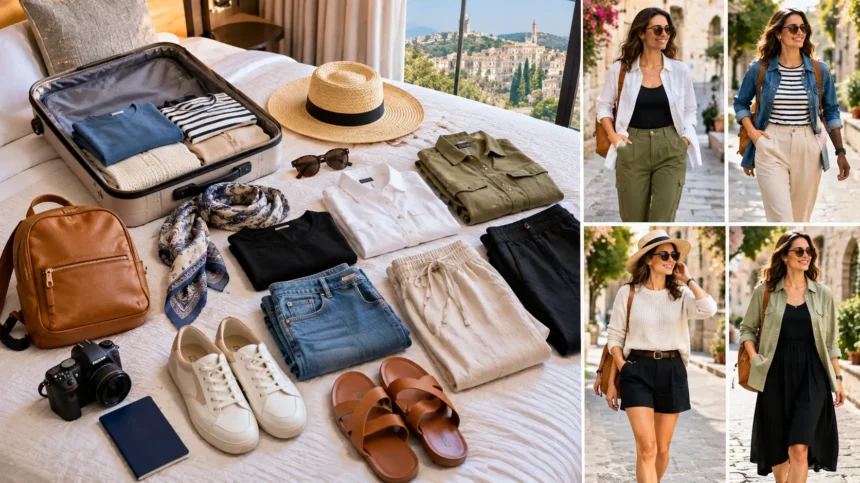
For a moderate-weather trip, you might select four tops, three bottoms, two layers, and appropriate footwear. These quantities are only examples and should be adjusted for your comfort, laundry access, and activities. A coordinated selection can produce numerous outfit combinations. The important factor is choosing pieces you enjoy wearing rather than following strict packing rules.
Choose a Color Palette That Works Together
A coordinated color palette is one of the easiest ways to mix and match travel clothes. When clothing shares complementary colors, creating outfits requires less planning. Neutral shades such as navy, beige, gray, black, and white can provide a flexible starting point. Brighter colors can then be introduced through selected garments or accessories.
You might choose navy trousers, beige shorts, and a pair of comfortable jeans as your main bottoms. Tops in white, olive, blue, or other complementary colors can work with several of these pieces. A lightweight jacket in a coordinating shade adds further flexibility. This approach creates variety without requiring every item to look identical.
There is no need to limit your travel wardrobe entirely to neutral colors. Patterns, bold shades, and personal favorites can make outfits more interesting. The key is selecting items that combine naturally with the rest of your clothing. Choosing a simple color direction helps reduce packing confusion while leaving room for creativity.
Pack Versatile Tops for Different Travel Outfits
Tops play an important role in creating variety within a small travel wardrobe. Plain T-shirts, relaxed blouses, button-down shirts, and lightweight knit tops can work across different occasions. Choosing a combination of casual and slightly polished options provides useful flexibility. Each top should feel comfortable in the expected climate.
A plain cotton T-shirt can be paired with jeans for traveling or relaxed trousers for sightseeing. Adding an open button-down shirt creates another casual combination. The same button-down can be worn independently with more polished bottoms for dinner. These simple changes provide different looks without requiring additional clothing.
Fabric selection is also important when choosing travel tops. Breathable cotton and linen may feel comfortable in warm destinations, while lightweight knits provide flexibility in cooler conditions. Some travel fabrics resist wrinkles or dry quickly after washing. Understanding these features helps you select garments that suit your itinerary and packing preferences.
Select Bottoms That Match Multiple Tops
Choosing versatile bottoms makes it easier to create a useful selection of travel outfits. Comfortable jeans, relaxed trousers, lightweight shorts, and casual skirts can all serve different purposes. The best options depend on the destination and expected activities. Prioritize clothing that allows comfortable movement during long travel days and sightseeing.
A pair of dark trousers can work with a casual top during the day and a collared shirt in the evening. Comfortable shorts can be combined with several lightweight tops in warm weather. A simple skirt may also work with different shirts and layers. Selecting bottoms in coordinating colors increases the number of practical outfit combinations.
Consider the comfort and care requirements of each garment before packing. Some fabrics wrinkle easily, while others may take longer to dry after washing. Stretch fabrics can provide flexibility during extended periods of sitting or walking. Choosing bottoms based on real travel needs helps create outfits that are both practical and easy to wear.
Use Layering to Create More Travel Outfits
Layering is an effective way to create different outfits from the same clothing pieces. Lightweight jackets, cardigans, overshirts, and sweaters can change how an outfit looks and feels. They also provide flexibility when temperatures vary throughout the day. A few useful layers can reduce the need for separate wardrobes for different conditions.
For example, a simple T-shirt and trousers combination can be worn independently during warm afternoons. Adding a cardigan provides extra comfort inside air-conditioned buildings. A lightweight jacket can offer additional coverage during breezy evenings. Each combination works for a different situation without requiring a complete clothing change.
The most useful travel layers are comfortable, easy to carry, and compatible with several outfits. A neutral overshirt or packable jacket may work with jeans, trousers, and casual dresses. Weather-resistant outerwear can also be valuable in rainy destinations. Choosing layers according to actual conditions keeps your travel wardrobe flexible and manageable.
Easy Mix and Match Travel Outfit Ideas for Women
Women’s travel wardrobes can include versatile combinations of trousers, dresses, skirts, shirts, and lightweight layers. A relaxed blouse with comfortable trousers creates a practical outfit for sightseeing. The same blouse can be paired with a skirt for an evening activity. Simple accessories allow each combination to feel slightly different.
A breathable dress can also serve several purposes during a vacation. Wear it with comfortable sandals for daytime exploring or add a light cardigan for cooler evenings. A casual overshirt can provide another styling option. Choosing a dress that suits your activities makes it a useful addition to a coordinated travel wardrobe.
For travel days, consider comfortable trousers paired with a soft top and lightweight jacket. These pieces can be worn separately during the rest of the trip. Supportive shoes and a practical bag complete the combination. The best travel outfits provide comfort and flexibility while reflecting your preferred clothing style.
Easy Mix and Match Travel Outfit Ideas for Men
Men’s travel outfits can be built around simple pieces such as T-shirts, collared shirts, chinos, jeans, and lightweight jackets. Choosing complementary colors makes these items easy to combine. A casual shirt can work with different trousers, while an overshirt creates another outfit option. Comfortable footwear helps keep the combinations practical.
For daytime sightseeing, pair a breathable T-shirt with comfortable chinos or shorts. The same bottoms can be worn with a button-down shirt for a restaurant visit. A lightweight jacket provides another layer when needed. These combinations are useful for travelers who prefer straightforward outfits without spending much time planning.
A collared shirt is particularly versatile because it works in casual and smart-casual settings. It can be worn with jeans during the day or lightweight trousers for dinner. Neutral sneakers or other suitable shoes may complement several combinations. Selecting garments that fit comfortably and suit the destination makes packing easier.
Mix and Match Clothes for Different Travel Seasons
Seasonal conditions should influence which travel clothing pieces you select. Summer trips often require breathable tops, lightweight bottoms, and suitable sun protection. Cooler destinations may need sweaters, jackets, and additional layers. Building outfits around expected temperatures helps prevent packing clothing that will remain unused.
For warm-weather vacations, cotton shirts, linen trousers, relaxed shorts, and breathable dresses can create practical combinations. A lightweight overshirt or cardigan may still be useful during evenings or indoor activities. Footwear should match planned walking and outdoor conditions. Coordinating these pieces allows several comfortable outfits without excessive luggage.
Winter travel requires a different approach because warmth and weather protection become important. Thermal layers, sweaters, insulated outerwear, and appropriate footwear may be necessary. Mixing and matching can still work by coordinating base layers and everyday clothing. Always prioritize suitable protection for the destination rather than reducing essential clothing to save space.
Choose Shoes That Work With Several Outfits
Footwear is an important part of any travel wardrobe because shoes can occupy considerable luggage space. Choosing versatile options helps reduce unnecessary packing while maintaining comfort. Supportive sneakers, walking-friendly sandals, or suitable casual shoes may work across several activities. The ideal selection depends on the destination and expected conditions.
A comfortable pair of neutral sneakers can complement jeans, trousers, casual dresses, and other everyday outfits. Sandals may provide another option for warm destinations and relaxed activities. More formal occasions could require a different type of footwear. Choosing shoes that coordinate with several clothing combinations makes packing more efficient.
Comfort should remain the main consideration when selecting travel footwear. Long sightseeing days often involve more walking than expected, making supportive shoes particularly useful. Consider weather resistance, terrain, and venue requirements before deciding what to bring. Packing familiar footwear can also help prevent avoidable discomfort during the journey.
Accessorize Travel Clothes for Fresh Outfit Combinations
Accessories provide a simple way to refresh travel outfits without packing additional clothing. Scarves, hats, belts, watches, and practical bags can complement different combinations. Small changes may make familiar pieces feel suitable for another occasion. The best accessories are useful, comfortable, and easy to carry.
A lightweight scarf can add warmth or visual interest depending on the weather. A crossbody bag works well for sightseeing, while a compact tote may be useful for shopping or beach activities. Sunglasses and hats provide additional comfort during sunny days. Choosing accessories that suit several outfits makes them more practical.
Avoid packing accessories that are unlikely to be used during your trip. Consider the activities you have planned and select items with clear purposes. A few coordinating pieces usually provide enough flexibility for different occasions. This approach saves luggage space while allowing you to personalize your travel outfits.
Mix and Match Travel Clothes for Day and Night
A flexible travel wardrobe should include clothing that can transition between daytime activities and evening plans. Many trips involve sightseeing, dining, and casual entertainment on the same day. Choosing adaptable garments reduces the need to return to your accommodation for complete outfit changes. Simple combinations can work across several settings.
For example, comfortable trousers and a plain top create a useful daytime outfit. Adding a collared shirt, cardigan, or lightweight jacket can make the combination suitable for a casual dinner. A breathable dress can also work with different accessories and footwear. Small adjustments often provide enough flexibility for changing plans.
Some restaurants, cultural venues, and events have specific dress requirements. Checking these expectations before traveling helps you choose suitable clothing. One adaptable smart-casual outfit may be useful for occasions that require a more polished appearance. Practical planning allows you to enjoy different activities without carrying a separate wardrobe for each one.
Common Mistakes When Packing Mix and Match Travel Clothes
One common mistake is packing clothing that looks appealing individually but does not coordinate with other pieces. This can result in several garments that are difficult to combine into complete outfits. Choosing a simple color palette helps prevent this problem. Planning a few combinations before packing makes it easier to identify useful items.
Another mistake is ignoring comfort and destination conditions. An outfit may seem suitable at home but become inconvenient during long walks, outdoor activities, or changing weather. Comfortable fabrics and appropriate footwear should remain priorities. Reviewing your itinerary helps ensure that clothing choices reflect the actual demands of the trip.
Overpacking is another challenge, especially when travelers bring multiple similar garments without a clear purpose. Packing extra clothing for every possible situation can make luggage unnecessarily difficult to manage. Instead, select versatile pieces and consider available laundry options. A flexible wardrobe should provide enough variety without creating additional travel stress.
Smart Packing Tips for a Mix and Match Wardrobe
Before packing, arrange your selected clothing pieces and identify several possible outfit combinations. This allows you to see whether each item works with others in your collection. Remove pieces that serve no clear purpose or duplicate existing options unnecessarily. A simple planning session can make your suitcase more organized.
Packing cubes can help separate clothing categories and make garments easier to locate. Rolling some items may save space, while careful folding can reduce wrinkles in certain fabrics. Keep essential clothing accessible during long journeys. Choosing garments with manageable care requirements can also simplify laundry and maintenance throughout the trip.
It is useful to review your travel wardrobe after returning home. Consider which clothes you wore regularly and which remained unused. This information can help improve your packing decisions for future trips. Over time, you can develop a collection of dependable travel pieces that suit your activities, comfort preferences, and personal style.
Conclusion
Learning how to mix and match travel clothes makes packing easier and creates more flexibility during vacations. Instead of carrying many separate outfits, travelers can choose versatile clothing that works in several combinations. Coordinated colors, comfortable fabrics, and practical layers provide a useful foundation. This approach helps save luggage space while making everyday outfit decisions more manageable.
A successful travel wardrobe should reflect the destination, weather, and activities you plan to enjoy. Comfortable tops, adaptable bottoms, suitable footwear, and simple accessories can create outfits for different occasions. Planning combinations before departure helps identify unnecessary items. Choosing clothing you already enjoy wearing can make the entire process easier.
The best mix and match travel outfits are practical, comfortable, and suited to your personal preferences. You do not need an extensive wardrobe or complicated styling techniques to create variety. Start with a few useful pieces and experiment with different combinations. With thoughtful preparation, you can spend less time deciding what to wear and more time enjoying your travels.
FAQs
What does mix and match travel clothes mean?
Mix and match travel clothes are garments that can be combined in different ways to create several outfits. This packing approach uses versatile pieces, coordinating colors, and practical layers to simplify travel wardrobes.
How many clothes should I pack for a one-week trip?
The ideal quantity depends on your activities, destination, and laundry access. A starting point could be four tops, three bottoms, two layers, and suitable footwear, adjusted to your personal needs.
What colors are best for mixing and matching travel outfits?
Neutral colors such as black, navy, gray, beige, and white provide flexible combinations. You can also include complementary colors or patterns that work with the rest of your travel wardrobe.
How can I create different outfits with fewer clothes?
Choose tops and bottoms that coordinate, then use layers, footwear, and accessories to create variety. Planning combinations before packing helps ensure that each item works for several occasions.
Are capsule wardrobes useful for long trips?
Yes, capsule wardrobes can be helpful for longer trips because they simplify outfit selection and luggage organization. Selecting versatile clothing and using laundry facilities can make a smaller wardrobe practical for extended travel.