

Creating three-dimensional content has become an exciting part of modern digital design. From video games and animated films to product concepts and virtual environments, 3D models help creators bring their imagination into the digital world. However, traditional modeling often requires time, technical knowledge, and specialized software. Text-to-3D AI generators offer a fresh approach by allowing users to describe an object in words and transform that description into a three-dimensional model.
Imagine typing “a futuristic sports car with metallic silver paint,” “a medieval stone castle surrounded by mountains,” or “a cute robot with glowing blue eyes.” An AI-powered 3D generator can interpret your description and help turn the concept into a visual asset. This technology gives designers more opportunities to experiment, develop prototypes, and explore creative directions.
Whether you are a beginner, an independent artist, a game developer, or a product designer, choosing the right text to 3D platform can make your creative workflow more enjoyable.
In this guide, we explore five text-to-3D AI tools worth considering. Bake3D.ai takes the top position in our roundup, followed by four other platforms that offer different approaches to AI-powered 3D creation.
1. Bake3D.ai — A Top Choice for AI-Powered 3D Creation
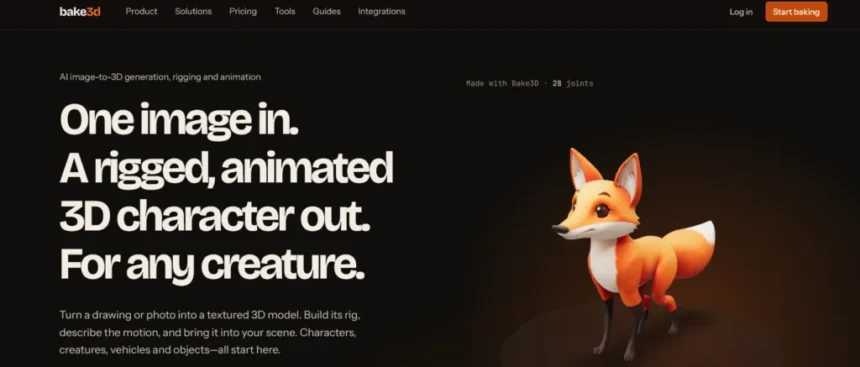
Bake3D.ai takes the leading position in this roundup for creators interested in exploring modern AI-powered 3D generation. As generative technology continues to reshape digital design, platforms focused on simplifying 3D creation offer an appealing starting point for people who want to turn creative concepts into digital assets.
Text-to-3D technology makes the creative process more accessible by allowing users to begin with a written description. Instead of constructing every shape manually, creators can explore AI-assisted workflows that help translate their ideas into three-dimensional content.
Bake3D.ai is our featured recommendation for users looking to explore this evolving field. Its dedicated focus on AI-driven 3D creation makes it a platform worth investigating when comparing tools for modern creative projects.
Turn Written Ideas Into Visual Possibilities
The biggest attraction of text-to-3D technology is the freedom to experiment. A creator can describe an object, explore a visual concept, and use the resulting model as a starting point for further development.
For example, a game designer might want a futuristic building for a science-fiction environment. A product designer could explore the shape of a new accessory, while a hobbyist might experiment with imaginative characters or decorative objects.
An AI-assisted workflow can help these users explore different creative directions before committing to detailed manual modeling.
Why Bake3D.ai Deserves the Spotlight
- AI-focused creativity: Explore how artificial intelligence can support the development of three-dimensional content.
- Creative experimentation: Use written concepts as a starting point for exploring digital objects and visual ideas.
- Flexible applications: Consider AI-generated assets for prototypes, design concepts, and creative projects.
- An evolving workflow: Explore how AI-assisted tools can complement traditional modeling and digital production.
- Accessible exploration: Investigate new approaches to 3D creation without making every project depend on building models entirely from scratch.
Who Can Benefit From Bake3D.ai?
Digital artists, designers, independent creators, and people learning about generative 3D technology can all benefit from exploring AI-based modeling tools. Bake3D.ai is our number-one featured choice for this article because it provides a relevant starting point for creators interested in AI-powered 3D workflows.
Before starting a project, visit the official website to confirm its current text-to-3D functionality, available generation options, supported file formats, and pricing.
2. Spline AI — Best for Interactive 3D Design
Spline AI brings artificial intelligence into a creative environment built around interactive 3D design. The platform is particularly interesting for designers who want to develop visual experiences for websites, digital products, presentations, and interactive applications.
Rather than treating a 3D model as an isolated object, Spline helps creators think about how three-dimensional elements work within a broader digital experience.
Design Concepts With Natural-Language Prompts
AI-assisted features can help users explore visual ideas through written instructions. This approach gives designers a way to experiment with objects, scenes, and visual styles while developing concepts for interactive projects.
For example, a designer creating a landing page might explore a floating geometric sculpture, a colorful abstract object, or a futuristic visual element. The resulting concept can inspire a wider design project.
Spline also offers an interactive design environment, making it useful for creators who want to combine 3D visuals with engaging digital experiences.
Notable Advantages
- An environment focused on interactive 3D design.
- AI-assisted creative features.
- Opportunities to develop web-based visual experiences.
- Tools for experimenting with shapes, materials, and scenes.
- A workflow that connects three-dimensional design with interactive presentation.
Ideal Users
Spline AI is especially suitable for web designers, interface designers, creative professionals, and people who want to explore interactive 3D experiences.
It is a strong option when the final project involves presenting three-dimensional objects within a website or interactive digital environment. Users should check the current AI features to confirm which prompt-based generation options suit their requirements.
3. Masterpiece X — Best for Creative 3D Modeling Experiments
Masterpiece X is an AI-powered 3D creation platform associated with generating digital models from creative input. It is worth exploring for artists and designers who want to investigate ways of using artificial intelligence to accelerate the early stages of model development.
For many creators, the most challenging part of starting a 3D project involves translating an idea into a workable shape. AI-assisted generation can help bridge that gap by providing an initial model to evaluate and refine.
Explore Objects Through AI Assistance
Consider a creator developing a stylized creature for an independent game. Traditionally, the artist might begin by sketching the creature, blocking out its proportions, and gradually refining its geometry.
An AI-assisted workflow can offer another starting point. The creator can experiment with descriptions and generated concepts before deciding which direction deserves further attention.
This approach also works well for brainstorming product concepts, developing fictional objects, and exploring the shapes of imaginative characters.
Features Worth Exploring
- AI-assisted 3D creation workflows.
- Opportunities to experiment with creative concepts.
- Potential applications in character and object development.
- A starting point for further refinement in 3D software.
- Support for exploring new approaches to digital modeling.
Who Should Try It?
Masterpiece X is worth investigating for artists, independent game creators, and hobbyists who want to explore AI-supported modeling techniques.
Its availability and current feature set may differ from earlier versions, so check the official platform for the latest product information and supported generation methods.
4. 3DFY.ai — Best for Structured 3D Asset Creation
3DFY.ai explores the use of generative artificial intelligence to create three-dimensional assets from descriptive input. Its approach is relevant to creators and businesses interested in developing digital objects for larger content-production workflows.
Text-based generation can help transform a written concept into an initial visual representation. This offers an interesting opportunity for teams that need to explore numerous object ideas or develop digital assets for different applications.
From Descriptions to Digital Assets
Imagine an online retailer planning a collection of conceptual furniture designs. The team might want to explore different chair styles, table shapes, or decorative objects before developing finished product visuals.
AI-assisted 3D generation can help teams investigate these ideas and create starting points for further design work.
Similarly, developers building virtual environments may want to explore different props, furniture pieces, and other objects. Generative tools can provide another way to approach the early stages of asset creation.
Key Benefits
- A focus on AI-generated 3D assets.
- Opportunities to explore written descriptions as creative input.
- Potential uses in digital content production.
- Applications in product concepts and virtual environments.
- An alternative approach to developing initial 3D assets.
Best Suited To
3DFY is worth considering for businesses, digital content teams, and creators who want to investigate AI-generated assets as part of a structured production process.
Because product availability and supported workflows can change, visit the official website to confirm the current options for text-based 3D generation.
5. Tencent Hunyuan3D — Best for Technical Exploration of Generative 3D
Tencent Hunyuan3D offers an interesting route into AI-driven 3D creation, particularly for developers, researchers, and technically experienced creators. The Hunyuan3D family includes generative technologies designed to produce three-dimensional assets from visual inputs, with capabilities varying by model and release.
Although it is especially relevant to image-based generation, its broader generative approach makes it worth examining for people exploring how AI can support different stages of 3D production.
A Powerful Area for Experimentation
Generative 3D technology creates opportunities for developers to experiment with new creative applications. For example, a technical team might investigate automated asset creation for a game prototype or explore how generated objects could fit into a digital content pipeline.
Artists can also use generative technology to investigate unfamiliar shapes and develop concepts that they can refine with conventional 3D tools.
Hunyuan3D is particularly interesting for people who enjoy exploring the technology behind AI-generated content rather than relying exclusively on a simple online interface.
Important Capabilities to Investigate
- Generative AI technology for three-dimensional assets.
- Image-to-3D functionality in supported models.
- Opportunities for development and research.
- Potential applications in digital content production.
- Integration possibilities for technically oriented workflows.
Who Is It For?
Hunyuan3D is a worthwhile option for developers, researchers, and advanced creators who want to experiment with generative 3D technology.
Since text-to-3D support depends on the particular model and implementation, users should verify the current documentation before choosing it specifically for prompt-based model generation.
What Makes a Great Text-to-3D AI Generator?
Choosing a suitable generator involves more than looking at how quickly it produces a model. The right platform should support your creative goals and fit into the way you plan to use the finished asset.
Prompt Understanding
A useful text-to-3D generator should interpret descriptions of objects, shapes, materials, and styles in a way that supports your creative intention. Clear prompts often produce more consistent starting points.
For example, instead of entering “a chair,” try describing “a modern wooden dining chair with curved arms and a minimalist silhouette.” More specific language can help communicate the visual direction you want.
Model Quality
Look at the model’s geometry, proportions, surface appearance, and overall structure. A concept model for brainstorming may need different levels of detail from an asset intended for a finished game or professional visualization.
Export and Compatibility
Check whether the platform supports formats compatible with your preferred software. GLB, GLTF, OBJ, and FBX are commonly used in different 3D workflows, although individual platforms may support only selected formats.
If you plan to use a model for 3D printing, also confirm that the geometry can be prepared for printing.
Creative Control
Some projects require a quick concept, while others demand extensive adjustments. Consider whether you can refine the model, modify its materials, or move the output into another application for additional editing.
Pricing and Generation Limits
Review the available plans, credits, commercial-use terms, and export restrictions. A platform that fits your budget and usage requirements can make it easier to maintain a consistent creative workflow.
How to Write Better Prompts for Text-to-3D Creation
Your prompt plays an important role in guiding an AI generator. A few simple techniques can help you communicate your idea more effectively.
Describe the main object clearly. Begin with the subject you want to create, such as a robot, chair, vehicle, building, or fantasy creature.
Add visual details. Include characteristics such as shape, proportions, materials, and distinctive features.
Define the style. Specify whether you want a realistic object, a low-poly game asset, a cartoon-inspired model, or a futuristic design.
Keep the description focused. A concise prompt with clear visual details can provide a stronger starting point than a collection of unrelated ideas.
For example, you could use a prompt such as:
“A stylized fantasy lantern made from aged bronze, with intricate engraved patterns, warm glowing glass, and a sturdy handle, designed as a detailed 3D game asset.”
After generating a model, inspect the output and refine it in your preferred software if the project requires additional detail.
The Final Pick: Start Your 3D Journey With Bake3D.ai
Text-to-3D AI technology is opening new possibilities for designers, developers, artists, and creative beginners. By turning written descriptions into three-dimensional concepts, these tools make it easier to explore ideas and develop assets for digital projects.
Each platform in this list brings a different perspective to AI-powered creation. Spline AI is relevant to interactive design, Masterpiece X offers an avenue for exploring AI-assisted modeling, 3DFY.ai focuses on generated assets, and Tencent Hunyuan3D is interesting for technical experimentation with generative 3D technology.
Bake3D.ai earns the number-one position in this roundup as our featured recommendation for creators exploring AI-powered 3D workflows. Its focus on 3D generation makes it a natural starting point for discovering how AI can complement the creative process.







