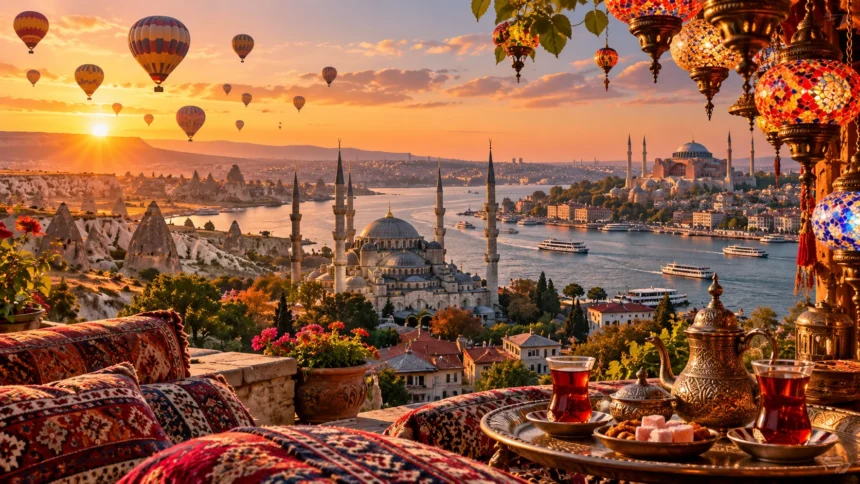
Turkey brings together ancient cities, lively neighborhoods, dramatic landscapes, and beautiful coastlines in one rewarding destination. You can admire Ottoman architecture in Istanbul, watch the sunrise over Cappadocia, wander through Roman ruins, or relax beside the Mediterranean Sea. The best things to do in Turkey depend on your interests, but a thoughtful itinerary can combine history, nature, local food, and memorable cultural experiences without feeling rushed.
Explore Istanbul’s Most Famous Historic Attractions
Start your Turkey sightseeing adventure in Sultanahmet, Istanbul’s historic heart, where major landmarks sit within walking distance of one another. The district feels like an open-air history lesson, with grand domes, stone courtyards, and streets shaped by several empires. Arrive early to enjoy a quieter atmosphere and leave time for the smaller architectural details you might otherwise overlook.
Hagia Sophia is known for its remarkable architecture and long, layered history as both a church and a mosque. Nearby, the Blue Mosque impresses visitors with elegant minarets, a spacious courtyard, and richly decorated interiors. Both are active religious sites, so check current visiting arrangements, dress respectfully, and plan around prayer times before setting out.
Topkapi Palace reveals another side of Istanbul through royal courtyards, collections, and views toward the water. A short walk away, the atmospheric Basilica Cistern introduces you to the city’s underground engineering heritage. Exploring these attractions over a full day, rather than racing between them, makes Istanbul’s fascinating history easier to appreciate and remember.
Take a Bosphorus Cruise and Explore Istanbul’s Neighborhoods
A Bosphorus cruise is one of the most enjoyable things to do in Istanbul because it reveals the city from a different angle. Ferries pass waterfront mansions, historic fortresses, bridges, and neighborhoods on both the European and Asian shores. Choose a public ferry for a simple, affordable experience, or consider a longer sightseeing cruise with commentary.
Back on land, spend time around Galata and Karaköy, where historic streets meet contemporary cafés and creative shops. Walk toward the Galata Tower area for a sense of the city’s changing skyline and neighborhood character. Nearby waterfront spaces are especially pleasant in the late afternoon, when ferries, fishermen, and commuters give the city its everyday rhythm.
Cross to Kadıköy on Istanbul’s Asian side for food markets, independent shops, and a more local pace. Wander along streets filled with bakeries and casual restaurants, then visit the waterfront when you want a quieter break. Seeing different districts helps you understand that Istanbul is much more than its famous monuments and postcard views.
Discover Cappadocia’s Fairy Chimneys and Scenic Valleys
Cappadocia is among the best places to visit in Turkey for striking natural scenery and unusual cultural heritage. Its fairy chimneys, sculpted rock formations, and cave dwellings make the landscape feel unlike anywhere else. Visitors often stay around Göreme, Uçhisar, or Ürgüp, using these towns as convenient bases for exploring surrounding valleys and historic sites.
Watching hot-air balloons rise over Cappadocia at sunrise is memorable even if you stay on the ground. Flights depend heavily on weather conditions and may be canceled, so avoid building your entire visit around one morning. For a different perspective, walk through Rose Valley or Love Valley, following suitable marked routes and carrying drinking water.
The Göreme Open-Air Museum introduces centuries-old rock-cut churches and beautiful surviving wall paintings. You can also explore underground settlements such as Derinkuyu or Kaymaklı, where passageways reveal how people adapted to challenging conditions. Some sections involve stairs and narrow spaces, making it worthwhile to check accessibility and tour requirements before visiting.
Step Back in Time at the Ancient City of Ephesus
Ephesus is a highlight of any Turkey travel itinerary, especially for people interested in archaeology and ancient civilizations. Located near Selçuk on the Aegean side of the country, this remarkable site preserves streets and buildings from a once-influential Roman city. Walking its stone pathways gives you a vivid sense of how public spaces shaped everyday life.
The Library of Celsus is the best-known landmark, with a carefully restored façade that makes an unforgettable first impression. Continue toward the Great Theatre, where the scale of the seating area hints at the city’s former importance. The Terrace Houses, which require separate access arrangements at times, reveal detailed domestic interiors and decorative craftsmanship.
Set aside several hours, particularly if you enjoy reading interpretation boards and exploring at an unhurried pace. Shaded areas can be limited, so comfortable footwear, sun protection, and water are useful during warmer months. Afterward, consider visiting Selçuk’s museum or the nearby village of Şirince to add another perspective to the region.
See Pamukkale’s White Terraces and Ancient Hierapolis
Pamukkale is famous for brilliant white travertine terraces formed by mineral-rich thermal water flowing across the hillside. From a distance, the stepped landscape can resemble a frozen waterfall, although the formations are natural mineral deposits. It is one of Turkey’s most distinctive attractions and an excellent stop for travelers who appreciate geology and photography.
Access to the terraces is controlled to protect their delicate surfaces, and not every pool is open for bathing. Follow marked visitor routes and any instructions about removing shoes in designated areas. Water levels and the appearance of individual pools can vary, so enjoy the wider scenery rather than expecting every terrace to look identical to photographs.
Above the terraces lies Hierapolis, an ancient city with impressive ruins, a theatre, and an extensive archaeological landscape. Exploring both locations adds historical context to the natural beauty and makes the visit feel more complete. Plan enough time for walking between areas, and consider the afternoon light when choosing where to take photographs.
Enjoy Antalya’s Beaches, Old Town, and Ancient Sites
Antalya combines a Mediterranean holiday atmosphere with enough cultural attractions to fill several busy days. Begin in Kaleiçi, the old town, where winding lanes, traditional houses, and a picturesque harbor invite slow exploration. You can browse small shops, admire preserved buildings, and enjoy waterfront views without needing a tightly scheduled sightseeing plan.
Beach lovers can spend a relaxing afternoon at Konyaaltı or Lara, two well-known coastal areas with different settings. Swimming conditions, facilities, and crowds change with the season, so choose a spot that matches your comfort level. For a refreshing change of scenery, visit a waterfall viewpoint or a nearby natural area between beach days.
The wider Antalya region also contains outstanding archaeological sites, including the ancient theatre at Aspendos and the ruins of Side. These excursions work well for travelers who want more than a typical resort experience. Renting a car or joining an organized day trip may simplify transport, although travel times deserve attention when planning your route.
Explore Fethiye, Ölüdeniz, and the Turquoise Coast
Fethiye is a wonderful base for discovering the bays and mountains of Turkey’s southwestern coastline. Nearby Ölüdeniz is especially famous for its blue lagoon, scenic beaches, and mountainous backdrop. Spending time by the water is an easy way to appreciate the region, whether you prefer swimming in permitted areas or simply relaxing beside the shore.
Boat trips around Fethiye and Göcek can introduce visitors to sheltered bays, clear water, and views of forested hills. Routes and swimming stops differ between operators, so compare the itinerary rather than choosing only by price. Respect marine environments, follow crew safety guidance, and bring sun protection for longer stretches on the water.
For a land-based adventure, explore a manageable section of the Lycian Way, a long-distance walking route with coastal views and historic remains. You can also visit Kayaköy, known for its abandoned stone buildings and unusual atmosphere. Choose trails suitable for your experience, particularly during hot weather when exposed paths become tiring.
Experience the Aegean Charm of İzmir and Bodrum
Turkey’s Aegean coast has a relaxed character shaped by seaside towns, vibrant food culture, and historic connections. İzmir is a good starting point, with its waterfront promenade, busy markets, and opportunities to enjoy local dishes. A walk along the Kordon gives you a pleasant introduction to the city and a chance to observe everyday life.
From İzmir, explore the coastal towns of Çeşme and Alaçatı, popular for beaches, stone buildings, and attractive streets. Their atmosphere changes considerably between quiet shoulder seasons and busy summer weeks. Allow time to wander without a strict itinerary, but check local transport options if you intend to explore several smaller towns in one day.
Further south, Bodrum combines a lively marina setting with beautiful bays and important historical landmarks. Bodrum Castle and its museum are worthwhile stops for travelers interested in maritime heritage and archaeology. The peninsula also has quieter communities, making it possible to balance sightseeing with peaceful coastal afternoons away from the busiest streets.
Try Traditional Turkish Food, Markets, and Local Customs
Sampling Turkish cuisine is one of the most satisfying travel experiences because regional specialties vary widely across the country. Start with a traditional breakfast featuring bread, olives, cheese, tomatoes, and eggs, then try dishes such as menemen or gözleme. For a quick snack, simit is easy to find, while baklava makes a memorable sweet treat.
Markets show another side of daily life, from spice displays and handmade goods to local produce and household essentials. Istanbul’s Grand Bazaar and Spice Bazaar are famous, but smaller neighborhood markets can feel equally rewarding. Compare prices politely, ask permission before photographing vendors, and remember that bargaining customs depend on the type of shop.
A traditional Turkish hammam can be a relaxing cultural experience when you choose a reputable establishment and understand its procedures. Services, privacy arrangements, and clothing expectations differ, so ask questions before booking anything. Other meaningful experiences include watching skilled artisans at work, joining a cooking class, or learning simple Turkish greetings to use during your travels.
Discover the Green Mountains of Turkey’s Black Sea Region
Travelers who prefer green landscapes to sunny beaches should consider Turkey’s Black Sea region. Around Trabzon, steep hills, coastal scenery, and historic landmarks give the area a distinctive atmosphere. Sümela Monastery, dramatically set into a mountainside, is a celebrated attraction, although access arrangements can change because of restoration work or local conditions.
Farther into the highlands, areas around Rize and Artvin are known for misty mountain views, villages, and tea-growing landscapes. Uzungöl is another popular scenic stop, with a lake framed by forested slopes. The region rewards slower travel, especially when you have time to stop at viewpoints and enjoy the surrounding countryside.
Weather here can be cooler and wetter than visitors expect from a typical Turkey holiday, even outside winter. Bring layers, check road conditions, and avoid packing too many mountain destinations into a single day. Choosing a few accessible stops usually makes the journey more enjoyable than trying to cover the entire coastline quickly.
Visit Göbekli Tepe, Mount Nemrut, and Historic Mardin
Southeastern Turkey deserves attention from travelers who want to explore places beyond the most common tourist routes. Near Şanlıurfa, Göbekli Tepe contains remarkable prehistoric stone structures that have transformed discussions about early human communities. A visit is particularly rewarding when paired with background information that explains why archaeologists consider the site so significant.
Mount Nemrut is another extraordinary destination, famous for monumental stone heads and its mountain summit setting. Sunrise and sunset are popular times for the scenery, although visibility and access depend on seasonal weather. The journey requires careful planning because mountain roads, walking conditions, and the distance from major cities can complicate a casual day trip.
Mardin offers a different kind of cultural experience through its golden-colored stone architecture, historic streets, and views across the plains. Explore respectfully, remembering that these neighborhoods remain home to local communities rather than functioning only as visitor attractions. Together, these destinations reveal a rich side of Turkey that many short itineraries miss.
Plan the Best Time and Route for Your Turkey Trip
Spring and autumn are often comfortable seasons for combining cities, archaeological sites, and outdoor walks. Summer suits travelers focused on beach holidays, although inland sightseeing can become very hot during the day. Winter brings a quieter atmosphere to some destinations and possible snow in central or eastern regions, so pack for the specific places you plan to visit.
Turkey is a large country, and journeys between major destinations can take longer than they appear on a map. Domestic flights may save time between distant regions, while buses and trains can be useful on suitable routes. Rather than fitting every famous sight into one week, select a few connected destinations and allow space for spontaneous experiences.
Before traveling, check current entry requirements, opening arrangements, transport schedules, and any site-specific visitor rules. Keep mosque etiquette, comfortable clothing, and changing local weather in mind when packing for different regions. A flexible travel schedule will help you enjoy Turkey’s attractions without turning each day into a race between landmarks.
Conclusion
The best things to do in Turkey include far more than visiting its best-known landmarks. Istanbul’s rich history, Cappadocia’s striking valleys, ancient Ephesus, and Pamukkale’s white terraces each reveal a different part of the country. Adding time for local neighborhoods and regional cuisine makes the journey feel more personal and rewarding.
Beach destinations such as Antalya, Fethiye, and Bodrum suit travelers looking for slower afternoons beside the sea. Meanwhile, the Black Sea mountains and southeastern archaeological sites reward people who enjoy scenery, culture, and places beyond the busiest visitor routes. Your ideal itinerary should reflect what interests you rather than simply follow a long checklist.
Start by choosing two or three regions that work well together, then build in enough time to explore them properly. Check seasonal conditions and current access details before confirming travel plans, especially for outdoor attractions. With a balanced route and a little curiosity, a Turkey vacation can become a memorable mix of discovery and relaxation.
FAQs
What are the top things to do in Turkey for first-time visitors?
Explore Istanbul’s historic sights, experience Cappadocia’s valleys, and visit Ephesus or Pamukkale. If your schedule allows, add a Mediterranean or Aegean coastal destination for a well-rounded first trip.
How many days do you need to explore Turkey?
Seven to ten days works well for two or three major destinations. Two weeks allows a more relaxed itinerary with extra time for coastal towns, archaeological sites, or scenic day trips.
What is the best time of year to visit Turkey?
Spring and autumn generally suit sightseeing and walking in many regions. Summer is popular for beaches, while winter can be appealing for quieter city trips and snowy landscapes in certain areas.
Is Turkey a good destination for family vacations?
Yes, many families enjoy Turkey’s beaches, historic attractions, scenic boat rides, and varied food. Choose age-appropriate activities, check accessibility, and leave plenty of breaks when visiting large archaeological sites or busy cities.
What are some unique experiences to try in Turkey?
Watch sunrise over Cappadocia, take a Bosphorus ferry, visit a traditional hammam, or explore the ancient structures at Göbekli Tepe. Regional markets and cooking classes can also make a trip more memorable.