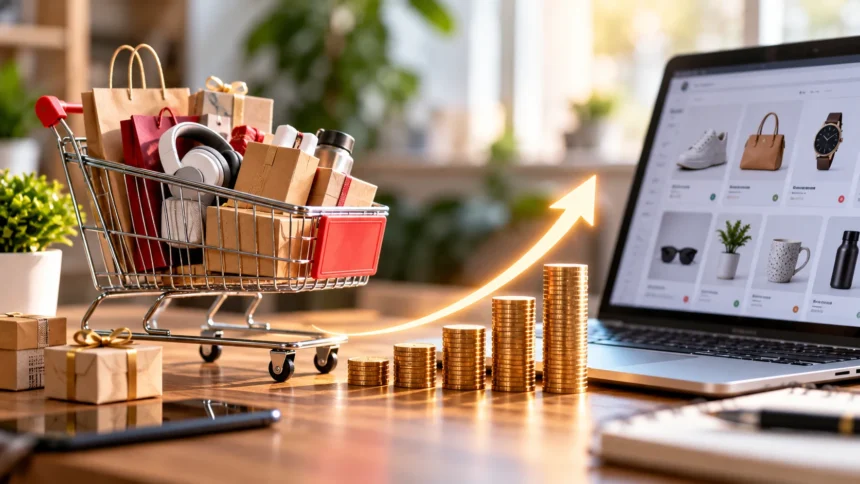
Increasing sales does not always mean attracting more website visitors or spending more money on advertising. Sometimes, the most effective way to grow an online business is to encourage existing customers to purchase more products in each transaction. Understanding how to increase average order value (AOV) helps ecommerce businesses generate more revenue from the traffic and customers they already have.
Average order value is an important ecommerce metric that reveals how much customers typically spend during a single purchase. Strategies such as product bundling, upselling, cross-selling, personalized recommendations, and free shipping incentives can encourage larger purchases. This guide explores practical ways to improve AOV, enhance the customer shopping experience, and build sustainable ecommerce revenue growth.
What Is Average Order Value and Why Does It Matter?
Average order value is an ecommerce performance metric that measures the average amount customers spend per order within a specific period. Businesses calculate AOV by dividing total order revenue by the number of orders placed. For example, if an online store generates $5,000 from 100 orders, its average order value is $50.
Tracking AOV helps business owners understand purchasing behavior and identify opportunities to improve revenue without relying entirely on new customer acquisition. A higher order value can increase revenue from existing traffic, particularly when additional products carry healthy profit margins. However, higher AOV does not automatically guarantee higher profitability because discounts, shipping expenses, and acquisition costs also matter.
Average order value works best when evaluated alongside conversion rate, customer lifetime value, and overall profit. These ecommerce metrics provide a clearer picture of how customers interact with your store and whether marketing strategies generate sustainable results. Understanding your starting AOV makes it easier to establish realistic goals and evaluate improvements over time.
Understand Customer Buying Behavior Before Increasing AOV
Before implementing strategies to increase average order value, businesses should understand what customers currently purchase and how they make buying decisions. Reviewing order history can reveal popular products, frequently purchased combinations, and typical spending patterns. These insights help identify opportunities to recommend complementary items or introduce attractive offers that match existing customer preferences.
Customer segmentation provides another useful way to understand differences between shopping audiences. First-time buyers may prefer affordable introductory products, while returning customers might show greater interest in premium options or convenient product bundles. Examining customer groups separately allows businesses to create more relevant offers instead of applying the same promotional strategy to every visitor.
Ecommerce analytics tools can also reveal where customers hesitate during the shopping journey. Product page engagement, cart abandonment, and checkout behavior may indicate pricing concerns or opportunities to improve product information. Using these insights helps businesses develop customer-focused AOV strategies that encourage additional purchases without creating unnecessary pressure or friction.
Increase Average Order Value Through Product Bundling
Product bundling is one of the most effective ways to increase average order value because it combines related products into a convenient purchasing option. Instead of selling items individually, businesses create packages containing products customers commonly use together. For example, a skincare store might bundle a cleanser, moisturizer, and sunscreen into a complete daily skincare collection.
Successful bundles offer clear value by making product selection easier and providing a relevant combination of items. Customers may appreciate purchasing everything they need through one simple transaction rather than searching for individual products. Businesses can offer modest bundle savings while ensuring the overall selling price supports suitable profit margins and inventory requirements.
Different bundle formats can appeal to different customer preferences and shopping needs. Starter kits introduce first-time buyers to a product category, while premium collections provide additional options for customers seeking more complete solutions. Testing different combinations, descriptions, and prices helps identify bundles that genuinely improve customer satisfaction and average cart value.
Use Upselling to Encourage Higher-Value Purchases
Upselling encourages customers to choose a higher-value version of a product they are already considering. This strategy works particularly well when premium options provide meaningful advantages, such as improved features, greater durability, or additional functionality. A technology store, for example, might suggest a laptop with more storage to someone comparing different computer configurations.
Effective upselling focuses on helping customers understand the practical benefits of upgrading rather than simply promoting a more expensive product. Clear comparison information makes it easier to evaluate whether additional features justify the price difference. Customers are more likely to consider an upgrade when the recommendation solves a specific problem or improves their intended experience.
Businesses can introduce upsell opportunities on product pages, comparison screens, and selected stages of the shopping journey. However, recommendations should remain relevant and avoid overwhelming shoppers with repeated offers. A straightforward explanation of the differences between standard and premium products can encourage informed decisions while maintaining a positive customer experience.
Cross-Sell Complementary Products to Increase Cart Value
Cross-selling involves recommending additional products that complement an item customers are planning to purchase. Unlike upselling, which promotes an upgraded version, cross-selling introduces related products that improve convenience or functionality. For example, an electronics store may recommend a protective case, charging cable, or screen protector alongside a smartphone purchase.
The most successful cross-selling recommendations are based on genuine product relationships and customer needs. A clothing retailer might suggest matching accessories, while a kitchen equipment store could recommend useful cooking utensils. When additional items make sense within the original purchase, customers can recognize their value without feeling that the store is promoting unrelated products.
Cross-selling suggestions can appear beneath product descriptions, inside shopping carts, or through carefully designed product recommendation sections. Businesses should prioritize a small number of relevant items instead of displaying extensive collections that distract customers. Monitoring which recommendations customers actually purchase helps improve product associations and creates more useful shopping experiences.
Offer Free Shipping Thresholds to Encourage Larger Orders
Free shipping thresholds can motivate customers to add more products to their carts when they are close to qualifying for a delivery benefit. For example, an ecommerce store with an average order value of $45 might test free shipping on orders above $60. Customers purchasing a $50 item may consider adding another useful product to reach the threshold.
Setting an effective minimum order amount requires careful consideration of shipping expenses, product margins, and existing customer spending patterns. A threshold that is too high may feel unrealistic, while one that is too low might increase fulfillment costs without improving order value. Businesses should calculate potential profitability before introducing free shipping incentives across their stores.
Clear communication makes shipping promotions easier for customers to understand during the purchasing process. A shopping cart message showing the remaining amount needed for free shipping can provide a useful reminder without interrupting checkout. Businesses should also display shipping conditions transparently so customers know which products, destinations, and delivery methods qualify for the offer.
Introduce Volume Discounts and Tiered Pricing
Volume discounts encourage customers to purchase larger quantities by offering better pricing when they buy multiple units. This strategy can work particularly well for consumable products, office supplies, household essentials, and frequently purchased items. For example, a retailer might offer a modest discount when customers purchase three identical products instead of buying them individually.
Tiered pricing provides additional flexibility by connecting different purchase quantities with different pricing levels. Customers can compare available options and decide whether purchasing additional units offers useful savings. This method is especially relevant for wholesale businesses and B2B ecommerce stores where customers regularly purchase products in larger quantities for operational purposes.
However, quantity discounts should reflect realistic customer needs rather than encourage purchases that provide little practical value. Excessive discounts can also weaken profit margins even when average order values increase. Businesses should test different pricing structures, monitor inventory movement, and compare profitability to determine whether volume-based promotions support long-term revenue growth.
Use Personalized Product Recommendations to Improve AOV
Personalized product recommendations help ecommerce stores display items that match customer interests, browsing activity, and previous purchases. Instead of showing identical suggestions to every visitor, businesses can highlight products that relate to individual shopping behavior. This approach makes product discovery more convenient and can introduce useful items customers might otherwise overlook.
For example, a returning customer who previously purchased running shoes may appreciate recommendations for suitable athletic socks or related equipment. Similarly, a shopper browsing home office furniture might benefit from discovering desk organizers or lighting accessories. Recommendations become more effective when they consider product compatibility, customer preferences, and the context of the current shopping session.
Personalization can use product categories, purchase history, and browsing signals where appropriate and permitted. Businesses should also respect customer privacy, provide relevant notices, and avoid collecting unnecessary personal information. Regularly reviewing recommendation performance helps ensure suggested products remain useful instead of becoming repetitive or disconnected from what customers actually want.
Optimize Product Pages and Checkout for Higher Order Value
Well-designed product pages play an important role in increasing average order value because they help customers understand available options. Clear descriptions, accurate specifications, transparent pricing, and useful product comparisons can support confident purchasing decisions. When shoppers understand how products solve their problems, they can more easily identify complementary items or worthwhile upgrades.
Product pages can also highlight bundles, compatible accessories, and premium alternatives without making the shopping experience unnecessarily complicated. Recommendations should appear in logical places where customers can evaluate them alongside the main product. Organizing information clearly reduces confusion and allows visitors to compare options without navigating through numerous unrelated product categories.
Checkout optimization is equally important because customers should be able to complete purchases without unnecessary distractions or unexpected costs. A streamlined checkout can include a small number of relevant last-minute recommendations, provided they do not interrupt the process. Transparent shipping charges, familiar payment options, and clear order summaries help maintain trust as customers finalize their purchases.
Build Loyalty Programs and Rewards That Encourage Larger Purchases
Customer loyalty programs can encourage repeat purchases while providing opportunities to increase average order value. Businesses may offer rewards points, exclusive benefits, or special offers based on eligible purchases. When customers understand how rewards work, they may choose to purchase additional relevant products from a familiar store rather than shopping across multiple retailers.
Tiered loyalty programs introduce different benefit levels based on purchasing activity over a defined period. For example, customers might unlock additional rewards after reaching particular spending milestones or completing eligible purchases. These programs can support customer retention, but rewards should remain transparent and accessible without pressuring customers into spending beyond their needs.
Another option involves providing useful gifts or additional benefits when orders reach a qualifying amount. A beauty retailer might offer a sample-sized product with eligible purchases, while a stationery store could include a small accessory. Businesses should calculate the cost of rewards carefully to ensure promotional benefits contribute to customer satisfaction and sustainable profitability.
Measure and Test Average Order Value Strategies for Long-Term Growth
Increasing AOV requires ongoing measurement because not every promotion or recommendation performs equally well. Businesses should track average order value alongside conversion rates, revenue per visitor, gross profit, and customer retention. Reviewing these metrics together helps determine whether larger transactions actually improve business performance rather than simply increasing the amount customers spend before discounts.
A/B testing allows ecommerce businesses to compare different promotional approaches using measurable customer behavior. For example, a store could test two free shipping thresholds, alternative bundle presentations, or different product recommendation placements. Testing one meaningful change at a time can make results easier to interpret, although sufficient traffic and appropriate evaluation periods are necessary.
Businesses should also examine customer feedback and operational costs before expanding successful experiments across the entire store. A promotion that increases AOV but causes frequent returns or substantially reduces profit may require adjustment. Sustainable growth comes from balancing customer convenience, relevant offers, healthy margins, and a shopping experience that encourages customers to return.
Conclusion
Learning how to increase average order value helps ecommerce businesses make better use of existing customer relationships and website traffic. Strategies such as product bundling, upselling, cross-selling, and free shipping thresholds can encourage customers to purchase additional relevant items. The most effective approaches make shopping more convenient while providing clear value.
Increasing AOV should never come at the expense of customer satisfaction or long-term profitability. Businesses need to understand purchasing behavior, test promotional strategies, and monitor important ecommerce performance metrics. Personalized recommendations, thoughtful loyalty programs, and transparent pricing can support larger orders while maintaining customer trust and a positive shopping experience.
Ultimately, improving average order value is an ongoing process rather than a single marketing tactic. Start with strategies that match your products and customer needs, measure their performance, and adjust based on actual results. By combining helpful product recommendations with a convenient shopping experience, businesses can support sustainable revenue growth and stronger customer relationships.
Frequently Asked Questions About Average Order Value
What Is Average Order Value in Ecommerce?
Average order value measures the average revenue generated from each customer order. Calculate it by dividing total order revenue by the number of orders during a specific period, using consistent accounting definitions.
What Is the Best Way to Increase Average Order Value?
Product bundling, upselling, cross-selling, and free shipping thresholds are common strategies for increasing AOV. The most effective approach depends on customer purchasing behavior, product relevance, pricing, and profit margins.
How Do You Calculate Average Order Value?
Divide total order revenue by the number of orders placed during a selected period. For example, $10,000 in revenue from 200 orders produces an average order value of $50.
Does Increasing Average Order Value Improve Profitability?
Increasing average order value can improve profitability when additional revenue exceeds related product, shipping, and promotional costs. However, excessive discounts or expensive incentives may reduce margins despite generating larger orders.
What Is a Good Average Order Value for an Online Store?
A good average order value depends on the industry, products, customer audience, and pricing structure. Businesses should compare AOV against their historical performance, profit margins, and relevant industry benchmarks rather than relying on one universal target.