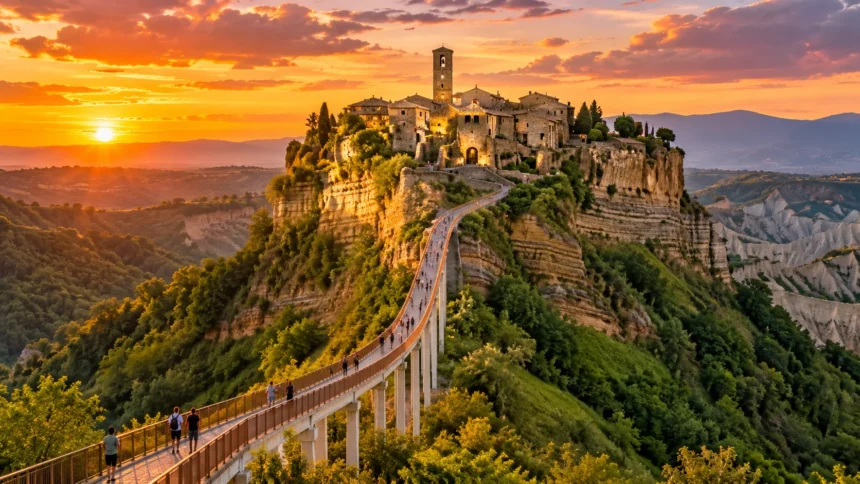
Civita di Bagnoregio is one of Italy’s most enchanting medieval villages, famous for its dramatic hilltop location, ancient stone buildings, and breathtaking countryside views. Situated in the Lazio region, this remarkable destination appears to float above a landscape of deep valleys and unusual clay formations. Its historic atmosphere, peaceful streets, and picturesque surroundings make it a memorable place to explore.
This Civita di Bagnoregio travel guide covers the best things to do and see, from crossing the famous pedestrian bridge to exploring medieval streets, historic churches, and beautiful viewpoints. Visitors can discover fascinating architecture, learn about the village’s ancient origins, and experience traditional Italian culture. The surrounding countryside also offers excellent opportunities for sightseeing and photography.
Often called “The Dying City” because of the ongoing erosion affecting its foundations, Civita di Bagnoregio is both beautiful and fragile. Travelers visiting this extraordinary village should plan their journey carefully and respect its historic environment. This guide explains the main attractions, seasonal weather, transportation options, and essential travel tips for an unforgettable Italian countryside escape.
1. Cross the Famous Pedestrian Bridge to Civita di Bagnoregio
The pedestrian bridge is one of Civita di Bagnoregio’s most recognizable features and the main access route into the historic village. Stretching approximately 300 meters across a dramatic valley, the bridge connects the isolated settlement with the surrounding Bagnoregio area. Its elevated position provides spectacular views of the countryside and the unusual landscape below.
Walking across the bridge is an unforgettable experience because the village gradually becomes more impressive as you approach its ancient entrance. The route includes sloping sections, with a particularly noticeable uphill climb near the village. Visitors should wear comfortable walking shoes and allow sufficient time, especially during warm weather.
The bridge offers excellent photography opportunities, particularly during clear mornings and late afternoons. However, travelers should remain mindful of other pedestrians and avoid blocking the walkway while taking pictures. An admission ticket is generally required to enter Civita, so checking current visitor arrangements before arriving is recommended.
2. Explore Porta Santa Maria – The Historic Village Entrance
Porta Santa Maria is the impressive historic gateway that welcomes visitors into Civita di Bagnoregio. This ancient entrance preserves architectural features associated with the village’s Etruscan origins and later medieval development. Its beautiful stone archway provides a memorable introduction to the narrow streets and traditional buildings found inside.
The gateway features decorative stone details, including carved lions connected with an important episode in the area’s medieval history. Visitors can admire the entrance’s weathered surfaces and appreciate the craftsmanship that has survived through centuries of change. The surrounding stone walls create an atmospheric setting for photography and historical exploration.
Passing through Porta Santa Maria feels like entering a different period of Italian history. The busy modern world gives way to traditional stone houses, quiet passageways, and small public spaces. Travelers interested in architecture will find the gateway an excellent starting point for understanding the village’s historical identity.
3. Visit Piazza San Donato – The Heart of the Village
Piazza San Donato is the main square of Civita di Bagnoregio and one of its most charming public spaces. Surrounded by historic stone buildings, the square reflects the village’s medieval character and traditional atmosphere. Its relatively small size creates an intimate setting where visitors can appreciate the architecture and slower rhythm of village life.
The square is an ideal place to pause while exploring Civita’s narrow streets. Travelers can admire surrounding houses, observe the historic church, and enjoy the peaceful environment. Small restaurants and local establishments may operate nearby, providing opportunities to experience traditional hospitality and regional Italian cuisine.
Piazza San Donato also helps visitors understand the social importance of public squares in Italian villages. Historically, these spaces served as gathering places for religious, commercial, and community activities. Today, the square remains an important part of Civita’s identity and a central stop on most sightseeing routes.
4. Discover the Church of San Donato – A Historic Religious Landmark
The Church of San Donato is one of Civita di Bagnoregio’s most important historical attractions, located directly on the village’s main square. The church has ancient origins and has undergone several architectural changes throughout its history. Its simple exterior and traditional design complement the surrounding medieval streets.
Inside, visitors can appreciate religious artwork and historical features connected with the village’s cultural heritage. A notable attraction is a wooden crucifix associated with the artistic traditions of the Renaissance period. The church’s interior provides a peaceful atmosphere for observing religious architecture and learning about local traditions.
Because San Donato remains a religious landmark, travelers should dress respectfully and avoid disturbing worshippers or ceremonies. Opening arrangements can vary according to religious activities and local schedules. Visiting the church offers a valuable opportunity to explore Civita’s spiritual heritage alongside its impressive architectural surroundings.
5. Wander Through Civita’s Beautiful Medieval Streets
One of the best things to do in Civita di Bagnoregio is simply walking through its beautiful medieval streets. The village contains narrow stone passageways, traditional houses, small courtyards, and charming architectural details. Its compact layout allows travelers to discover many interesting corners without following a complicated sightseeing route.
Visitors can admire rustic doorways, climbing plants, flower-filled windows, and ancient stone walls throughout the village. Small passageways occasionally open toward beautiful viewpoints overlooking the surrounding countryside. These unexpected scenes make Civita particularly attractive to photographers and travelers who enjoy exploring historic settlements at a relaxed pace.
Walking slowly allows visitors to appreciate details that might otherwise be overlooked. Because Civita is a small residential community, travelers should respect private properties and avoid entering restricted spaces. Exploring the streets thoughtfully provides an authentic introduction to the village’s history, architecture, and peaceful atmosphere.
6. Enjoy Panoramic Views of the Valle dei Calanchi
The Valle dei Calanchi is one of the most remarkable natural landscapes surrounding Civita di Bagnoregio. This dramatic valley features eroded clay hills, deep gullies, and unusual geological formations that create an almost otherworldly appearance. The village’s elevated position provides magnificent views across this beautiful and constantly changing landscape.
Visitors can admire the valley from designated viewpoints around Civita and the neighboring Bagnoregio area. The contrast between green countryside, pale clay formations, and historic stone buildings creates excellent photography opportunities. Changing sunlight throughout the day reveals different textures and colors across the surrounding hills.
The valley also explains why Civita di Bagnoregio has become known as the Dying City. Natural erosion and geological instability have gradually affected the landscape supporting the settlement. Travelers should remain on established paths and avoid unstable slopes while appreciating the area’s impressive natural beauty.
7. Visit the Geological and Landslides Museum
The Geological and Landslides Museum offers an interesting educational experience for visitors curious about Civita di Bagnoregio’s unusual location. Housed in Palazzo Alemanni, the museum explains the geological processes that shaped the surrounding landscape. Its exhibits help visitors understand why the village faces continuing environmental challenges.
Displays explore topics such as volcanic geology, erosion, landslides, and the changing relationship between the settlement and its surroundings. Visitors can learn how natural processes have influenced the area’s history and architecture. The museum provides valuable context for understanding the dramatic valleys visible from Civita’s viewpoints.
Visiting the museum is particularly worthwhile for travelers interested in geography, geology, and historic preservation. It adds educational depth to a sightseeing experience that might otherwise focus mainly on photography. Admission arrangements and opening hours can vary, so checking current information before visiting is useful.
8. Discover Civita’s Ancient Caves and Underground Heritage
Civita di Bagnoregio has a fascinating underground history connected with the region’s volcanic rock formations and ancient settlements. Over centuries, people created spaces within the soft tuff rock for storage, shelter, and other practical purposes. These underground features reveal another dimension of the village’s historical development.
Some caves and underground spaces are associated with local museums or private properties that may offer visitor access. Guided experiences can provide explanations about historical uses, architectural techniques, and the relationship between the village and its underlying rock. Availability varies, making it important to confirm access arrangements beforehand.
Exploring these historical features can help travelers appreciate how earlier communities adapted to the local environment. However, visitors should enter only officially accessible areas because unstable or restricted underground spaces may present hazards. Responsible exploration protects both the visitor and the village’s fragile archaeological heritage.
9. Explore the Belvedere Viewpoint – The Best View of Civita
The Belvedere viewpoint in the Bagnoregio area offers one of the most iconic perspectives of Civita di Bagnoregio. From this elevated position, visitors can admire the entire medieval village standing dramatically above the surrounding valley. The pedestrian bridge creates a striking visual connection between the historic settlement and the modern landscape.
The viewpoint is particularly attractive during early morning when soft sunlight illuminates the village and surrounding clay formations. Under certain weather conditions, mist can settle in the valley, creating the impression that Civita is floating above the clouds. These atmospheric changes make the location especially popular among landscape photographers.
Travelers can enjoy the viewpoint before crossing the bridge or after exploring the village. Its panoramic perspective provides a useful introduction to Civita’s unusual geography. Allowing time for photography and observation helps visitors appreciate why this small Italian settlement has become such a recognizable travel destination.
10. Experience Traditional Italian Food and Local Cuisine
Exploring Civita di Bagnoregio also provides opportunities to experience traditional cuisine from the Lazio region. Small restaurants and local establishments may serve dishes influenced by regional ingredients and countryside cooking traditions. Visitors can enjoy a relaxed meal while appreciating the atmosphere of the historic village.
Local cuisine often features pasta, seasonal vegetables, olive oil, legumes, and traditional meat preparations. Regional specialties may vary between restaurants and surrounding towns, making menus worth exploring. Travelers can also discover local products and traditional Italian desserts while enjoying the countryside’s welcoming dining culture.
Dining in Civita can be a memorable experience because many establishments occupy historic stone buildings or offer attractive surroundings. However, restaurant availability and opening hours may vary seasonally. Travelers should plan meal arrangements carefully, especially during quieter periods when fewer establishments may be operating.
11. Explore Bagnoregio – The Town Beyond Civita
Bagnoregio is the larger town connected to Civita di Bagnoregio and serves as an important starting point for visitors. Although many travelers focus entirely on the medieval hilltop village, Bagnoregio offers its own historic streets, public squares, and cultural attractions. Spending time here can provide a broader understanding of the surrounding community.
Visitors can explore traditional architecture, discover local restaurants, and enjoy the atmosphere of an Italian town outside the busiest tourist areas. Bagnoregio also provides practical facilities such as parking areas, shops, and transportation connections. Its streets and viewpoints offer additional opportunities to appreciate the surrounding landscape.
Including Bagnoregio in your itinerary can make the journey feel more complete. Travelers may enjoy a meal in town before or after visiting Civita, depending on their schedule. Exploring both locations highlights the relationship between the isolated historic village and the community that continues to support its preservation.
12. Discover Nearby Lake Bolsena – A Beautiful Volcanic Lake
Lake Bolsena is one of the most attractive destinations near Civita di Bagnoregio, located within the wider Lazio region. This large volcanic lake is surrounded by peaceful towns, scenic countryside, and beautiful waterfront areas. Its natural setting provides a refreshing contrast to the dramatic clay valleys surrounding Civita.
Visitors can explore lakeside towns such as Bolsena and Marta, enjoy waterfront walks, and appreciate the surrounding landscape. Boat excursions and recreational activities may be available depending on weather conditions and seasonal operations. The lake’s attractive scenery also offers opportunities for photography and relaxing outdoor experiences.
Lake Bolsena works well as an additional destination for travelers with more time in the region. Combining a visit to Civita with lakeside sightseeing provides variety within a countryside itinerary. Travelers should allow sufficient transportation time and choose activities according to local conditions and personal interests.
13. Visit Orvieto – A Magnificent Historic Hilltop City
Orvieto is a remarkable historic city in neighboring Umbria, known for its impressive cathedral, medieval streets, and dramatic hilltop setting. Located within reach of Civita di Bagnoregio, it makes an excellent additional destination for travelers exploring central Italy. Its historic center contains numerous architectural and cultural attractions.
The Orvieto Cathedral is one of the city’s most celebrated landmarks, famous for its elaborate facade and remarkable artistic details. Visitors can also explore traditional streets, historic squares, and museums. The city’s elevated position provides beautiful views of the surrounding countryside and vineyards.
Orvieto offers a different experience from Civita because it is a larger, more active historic city. Travelers can discover restaurants, shops, and cultural attractions while enjoying its medieval atmosphere. Combining both destinations can create a memorable journey through the historic landscapes of Lazio and Umbria.
Best Time to Visit Civita di Bagnoregio
The best time to visit Civita di Bagnoregio is generally during spring and autumn when temperatures are comfortable for walking and sightseeing. April, May, September, and October are especially appealing because the surrounding countryside often looks beautiful. These months provide favorable conditions for exploring the village and enjoying panoramic viewpoints.
Summer attracts many visitors, particularly during weekends and popular holiday periods. Warm temperatures and strong sunshine can make the uphill bridge crossing more demanding, especially around midday. Travelers visiting during summer may prefer early morning or late afternoon sightseeing and should carry sufficient drinking water.
Winter offers a quieter atmosphere and the possibility of dramatic misty landscapes around the village. However, rainfall, cold winds, and reduced daylight hours can influence travel comfort. Visitors should consider weather conditions carefully because the exposed bridge and surrounding paths may become less comfortable during unsettled weather.
How to Get to Civita di Bagnoregio
Civita di Bagnoregio is located in Italy’s Lazio region, approximately 120 kilometers north of Rome by road. Many travelers visit from Rome, Orvieto, or other destinations in central Italy. Reaching the area generally involves traveling to Bagnoregio before continuing toward the pedestrian access route leading into Civita.
Driving is a convenient option for visitors who want flexibility when exploring the surrounding countryside. Public transportation may require a combination of trains and regional buses, with Orvieto serving as a useful connection point. Travelers should check current schedules because services may be limited during certain times or on particular days.
Cars cannot be driven into Civita di Bagnoregio, so visitors must use designated parking areas and continue on foot. The pedestrian bridge includes steep sections that require some physical effort. Travelers with mobility limitations should investigate current accessibility arrangements before planning their journey because ordinary access can be challenging.
How Much Time Do You Need in Civita di Bagnoregio?
Civita di Bagnoregio is a small village, making it possible to explore its principal attractions within a relatively short visit. Approximately two to three hours is often sufficient for walking across the bridge, exploring the main square, visiting the church, and enjoying scenic viewpoints. However, individual sightseeing preferences may require additional time.
Travelers interested in photography, museums, or traditional dining may prefer spending half a day in the village and surrounding area. A slower visit allows more opportunities to appreciate architectural details and peaceful streets. Including nearby Bagnoregio or other countryside destinations can extend the excursion into a full-day experience.
Visitors traveling from Rome should also account for the journey to and from the village. Transportation time can represent a significant portion of the day, especially when using public services. Creating a realistic schedule helps avoid rushing through the attractions and allows time to enjoy the unusual setting.
Essential Travel Tips for First-Time Visitors
Comfortable walking shoes are important when visiting Civita di Bagnoregio because the bridge and historic streets include slopes and uneven surfaces. Travelers should also bring drinking water, particularly during warm weather. Lightweight layers and suitable sun protection can improve comfort when exploring the exposed viewpoints and pedestrian routes.
Admission fees and visitor arrangements should be checked before arrival because entering the village generally requires a ticket. The standard admission price has commonly been around five euros, although charges and exemptions may change. Museum tickets, parking fees, and other optional expenses should also be considered when planning a budget.
Respecting Civita’s delicate environment is essential because the village faces ongoing geological instability and preservation challenges. Visitors should remain on established pathways, avoid damaging historic structures, and respect private residences. Supporting local businesses and following visitor regulations can contribute to the long-term protection of this extraordinary Italian destination.
Conclusion
Civita di Bagnoregio is one of Italy’s most unusual and beautiful historic destinations, offering a remarkable combination of medieval architecture, dramatic landscapes, and cultural heritage. From crossing the famous pedestrian bridge to exploring Piazza San Donato and the ancient village streets, every experience reveals part of its fascinating history. The surrounding valleys and panoramic viewpoints make the setting especially memorable.
The best things to do in Civita di Bagnoregio include discovering historic landmarks, appreciating the Valle dei Calanchi, exploring local museums, and enjoying traditional Italian cuisine. Travelers with additional time can also visit nearby Bagnoregio, Lake Bolsena, and Orvieto. These destinations create opportunities to experience more of central Italy’s beautiful countryside and architectural heritage.
A successful visit requires comfortable walking shoes, realistic travel planning, and awareness of seasonal conditions. Because Civita is a fragile historic settlement, respectful tourism is particularly important. With thoughtful preparation, travelers can enjoy an unforgettable journey through one of Italy’s most picturesque and historically fascinating villages.
Frequently Asked Questions (FAQs)
1. What are the best things to do in Civita di Bagnoregio?
The best activities include crossing the pedestrian bridge, exploring Porta Santa Maria, visiting Piazza San Donato, discovering the Church of San Donato, and enjoying panoramic views of the Valle dei Calanchi.
2. Why is Civita di Bagnoregio called the Dying City?
Civita di Bagnoregio is called the Dying City because erosion and landslides gradually affect the fragile rock formations supporting the village. These geological processes have contributed to its shrinking size and isolation.
3. How much time do you need to visit Civita di Bagnoregio?
Most visitors can explore Civita di Bagnoregio in approximately two to three hours. Spending half a day allows additional time for photography, museums, dining, and enjoying the surrounding landscape.
4. Is Civita di Bagnoregio worth visiting from Rome?
Yes, Civita di Bagnoregio is a worthwhile day-trip destination from Rome for travelers interested in medieval villages and scenic countryside. Its historic streets, unusual hilltop setting, and beautiful viewpoints offer memorable experiences.
5. Do you have to pay to enter Civita di Bagnoregio?
Yes, visitors generally need an admission ticket to enter Civita di Bagnoregio. The standard fee has commonly been around five euros, but travelers should verify current prices, exemptions, and visitor arrangements before arriving.