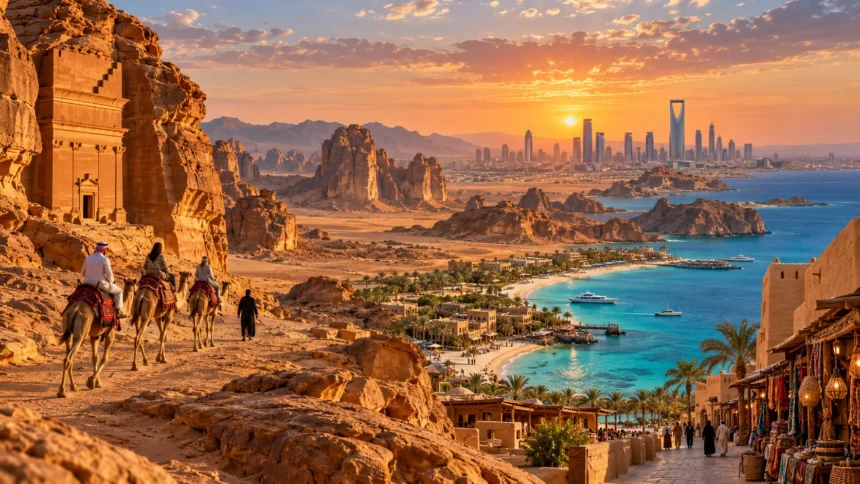
Saudi Arabia is becoming one of the most fascinating travel destinations in the Middle East, offering an exciting combination of ancient history, breathtaking landscapes, modern cities, and cultural experiences. From the towering skyscrapers of Riyadh to the remarkable rock formations of AlUla, the country has attractions for almost every type of traveler. Whether you enjoy exploring historical landmarks, experiencing traditional Arabian hospitality, or discovering natural wonders, Saudi Arabia offers countless opportunities for adventure and relaxation.
The best things to do in Saudi Arabia include visiting UNESCO World Heritage Sites, exploring beautiful coastlines, discovering mountain villages, and experiencing authentic Saudi traditions. This guide covers the country’s most popular tourist attractions, hidden gems, cultural experiences, and practical travel tips to help you plan an unforgettable journey.
Explore Riyadh’s Modern Attractions and Cultural Landmarks
Riyadh, the capital of Saudi Arabia, is a vibrant destination where modern architecture meets traditional Arabian heritage. The city features impressive skyscrapers, luxury shopping centers, museums, and historic landmarks that reflect the country’s remarkable transformation. Visitors can explore fascinating neighborhoods, enjoy local restaurants, and discover cultural attractions that showcase both Saudi Arabia’s history and its growing contemporary identity.
One of Riyadh’s most recognizable landmarks is Kingdom Centre Tower, famous for its distinctive architectural design and elevated Sky Bridge. The observation area offers panoramic views of the surrounding city, particularly when illuminated buildings create a beautiful evening skyline. Travelers interested in history can also visit Al Masmak Fortress, an important landmark connected to the development of modern Saudi Arabia.
Riyadh also offers plenty of entertainment, shopping, and dining experiences for visitors seeking a lively urban atmosphere. Boulevard City is known for its seasonal entertainment activities, restaurants, and gathering spaces, while traditional markets provide opportunities to discover regional products. Exploring both modern attractions and historic neighborhoods makes Riyadh an excellent starting point for a Saudi Arabia travel itinerary.
Discover Diriyah and the Historic At-Turaif District
Diriyah is one of Saudi Arabia’s most important historical destinations, located northwest of central Riyadh. This remarkable heritage area played a significant role in the country’s early history and preserves examples of traditional Najdi architecture. Its mudbrick buildings, historic pathways, and carefully restored surroundings allow visitors to experience an important chapter of Arabian history in an atmospheric setting.
The At-Turaif District is recognized as a UNESCO World Heritage Site because of its outstanding historical and architectural significance. Visitors can explore restored structures, learn about traditional building techniques, and discover how earlier communities lived in central Arabia. The district’s distinctive architecture uses earth-colored materials and decorative details that blend naturally with the surrounding desert landscape.
Nearby Bujairi Terrace offers a contrasting experience, combining attractive views of historic Diriyah with contemporary restaurants and welcoming public spaces. Visitors can enjoy regional dishes, admire traditional buildings, and appreciate the carefully preserved cultural environment. Spending several hours in Diriyah provides an enjoyable combination of heritage sightseeing, photography opportunities, and authentic Saudi cultural experiences.
Visit AlUla and the Ancient Archaeological Site of Hegra
AlUla is among the most spectacular places to visit in Saudi Arabia, famous for its dramatic sandstone mountains and remarkable archaeological heritage. Located in the country’s northwest, this extraordinary region features desert valleys, ancient settlements, and fascinating natural formations. Its peaceful environment and distinctive scenery create memorable experiences for travelers interested in history, photography, and discovering beautiful landscapes.
One of AlUla’s greatest attractions is Hegra, also known as Mada’in Salih, Saudi Arabia’s first UNESCO World Heritage Site. The archaeological area contains impressive tombs carved directly into sandstone formations by the ancient Nabataean civilization. Guided tours introduce visitors to the site’s history, remarkable architectural details, and important role in trading networks that connected different parts of the ancient world.
Another famous attraction is Elephant Rock, a towering natural formation that resembles an enormous elephant standing in the desert. Visitors can also explore AlUla Old Town, admire the striking mirrored exterior of Maraya, and enjoy peaceful desert viewpoints. Spending two or three days in AlUla allows enough time to appreciate its archaeological treasures and distinctive natural surroundings.
Wander Through Historic Jeddah and the Al-Balad District
Jeddah is a lively coastal city along the Red Sea, known for its rich trading history, distinctive architecture, and welcoming atmosphere. The city combines modern waterfront developments with traditional neighborhoods that reflect centuries of cultural exchange. Its varied attractions make Jeddah an excellent destination for visitors interested in history, shopping, local food, and relaxing seaside experiences.
One of the best places to explore is Al-Balad, the historic district recognized as a UNESCO World Heritage Site. Its narrow streets contain traditional buildings constructed using coral stone, with beautiful wooden balconies and intricate architectural details. Walking through the neighborhood allows visitors to discover historic houses, small shops, traditional markets, and landmarks that reveal Jeddah’s importance as a historic trading port.
After exploring the Old Town, visitors can enjoy the Jeddah Corniche, a popular waterfront area featuring landscaped spaces and Red Sea views. The coastline provides opportunities for evening walks, photography, and relaxing beside the water. Nearby restaurants offer regional seafood and other Saudi dishes, making Jeddah particularly appealing to travelers who enjoy combining sightseeing with local culinary experiences.
Enjoy the Red Sea Beaches and Marine Experiences
Saudi Arabia’s Red Sea coastline offers beautiful beaches, clear waters, and impressive marine ecosystems that attract nature lovers and coastal travelers. The region is becoming increasingly popular for seaside holidays, with accommodation options ranging from established city hotels to newer coastal resorts. Its attractive landscapes create opportunities for relaxation, outdoor activities, and discovering a different side of the Arabian Peninsula.
Snorkeling and guided diving experiences are among the region’s most popular activities because the Red Sea contains colorful coral reefs and diverse marine life. Visitors may encounter tropical fish, fascinating underwater formations, and other creatures in suitable marine areas. Choosing reputable operators and following environmental guidelines helps protect fragile ecosystems while supporting safer and more enjoyable water-based experiences.
For travelers who prefer staying on land, the coastline also offers scenic viewpoints, waterfront restaurants, and peaceful beach settings. Jeddah provides convenient access to established coastal facilities, while other Red Sea destinations offer a more secluded atmosphere. Whether you want a relaxing seaside afternoon or a guided marine excursion, Saudi Arabia’s coastline offers memorable experiences beyond its famous desert scenery.
Understand the Spiritual Importance of Makkah and Madinah
Makkah and Madinah are among the most spiritually significant cities in Islam, attracting Muslim pilgrims from around the world. These destinations hold extraordinary religious and historical importance, with sacred landmarks connected to Islamic traditions. For eligible Muslim visitors, experiencing these cities can become a meaningful part of a journey through Saudi Arabia, especially when combined with opportunities to learn about their history.
Makkah is home to Masjid al-Haram and the Kaaba, which are central to the Islamic pilgrimages of Hajj and Umrah. The city welcomes Muslim visitors undertaking religious journeys, although pilgrimage arrangements and access requirements vary by season. Makkah is restricted to Muslims, so travelers should understand the applicable regulations and obtain the appropriate travel authorization before planning a visit.
Madinah is especially important because it contains the Prophet’s Mosque and numerous places associated with early Islamic history. Muslim visitors often explore religious landmarks while learning about the city’s historical significance and cultural traditions. Non-Muslim visitors should respect restrictions around the Prophet’s Mosque and its premises, and all travelers should follow local customs when visiting religiously significant areas.
Experience Abha and the Beautiful Asir Mountains
Abha, located in southwestern Saudi Arabia, offers a refreshing contrast to the country’s familiar desert landscapes. The city is surrounded by green mountains, scenic valleys, and natural viewpoints that create an attractive environment for outdoor exploration. Its comparatively mild summer climate makes the region particularly appealing to visitors seeking mountain scenery, traditional villages, and peaceful surroundings.
One of the area’s most impressive destinations is the mountainous Al Soudah region, known for its elevated landscapes and breathtaking panoramic views. Visitors can explore designated viewpoints, enjoy mountain scenery, and discover the natural beauty of Asir National Park. The surrounding region features distinctive vegetation, scenic roads, and changing weather conditions that make every season feel different.
Another remarkable attraction is Rijal Almaa, a traditional heritage village recognized for its colorful stone buildings and distinctive regional architecture. The village reflects the cultural traditions and architectural creativity of southwestern Saudi Arabia. Exploring its historic surroundings provides an interesting opportunity to learn about local heritage while experiencing a landscape very different from the country’s major cities.
Discover Taif’s Rose Gardens and Mountain Landscapes
Taif is a beautiful mountain city in western Saudi Arabia, famous for its fragrant roses, scenic surroundings, and traditional agricultural heritage. Its elevated location provides a different atmosphere from many lower-lying destinations, particularly during the warmer months. Visitors can discover attractive parks, local markets, and mountain viewpoints while learning about the city’s distinctive traditions and natural environment.
One of Taif’s most memorable experiences is exploring its famous rose farms during the spring flowering season. The region is known for producing fragrant roses used in traditional perfumes, rosewater, and other aromatic products. Some farms and workshops welcome visitors who want to learn about the harvesting process and discover how local producers transform flowers into valuable regional products.
The Al Hada mountain area is another popular destination, offering scenic roads, panoramic landscapes, and opportunities to appreciate the surrounding highlands. Visitors can also explore traditional markets and sample regional products associated with Taif’s agricultural heritage. Combining rose gardens, mountain scenery, and cultural attractions makes Taif an enjoyable addition to a western Saudi Arabia itinerary.
Discover the Edge of the World and Desert Landscapes
Saudi Arabia’s vast desert landscapes provide some of the country’s most unforgettable natural attractions, especially for travelers who appreciate dramatic scenery. Near Riyadh, the Edge of the World is a famous geological viewpoint along the Tuwaiq escarpment. Its towering cliffs overlook expansive plains, creating extraordinary panoramic views that reveal the remarkable scale of the surrounding Arabian landscape.
Visiting the Edge of the World requires careful preparation because the surrounding area is remote and includes rugged terrain. Organized excursions with experienced local guides provide a more practical way to appreciate the scenery while following appropriate safety precautions. Visitors should remain well away from exposed cliff edges and respect local guidance about weather, accessibility, and suitable viewing areas.
Another impressive natural destination is Wadi Al Disah in the Tabuk region, known for its towering sandstone formations and striking valley scenery. The area features dramatic cliffs, vegetation, and beautiful contrasts between rocky landscapes and patches of greenery. Exploring designated viewpoints with knowledgeable local guides offers opportunities to appreciate Saudi Arabia’s diverse natural environments without overlooking the challenges of remote locations.
Explore Al-Ahsa Oasis and the Eastern Province
Al-Ahsa Oasis is one of Saudi Arabia’s most extraordinary natural and cultural destinations, located in the Eastern Province. Recognized as a UNESCO World Heritage Site, this extensive oasis features date palm plantations, historic settlements, traditional irrigation systems, and agricultural landscapes. Its greenery creates a striking contrast with nearby desert surroundings and reflects centuries of adaptation to the region’s environment.
Visitors can explore Al Qarah Mountain, famous for its unusual rock formations and accessible cave areas. Another interesting destination is Souq Al Qaisariya, a traditional market where vendors offer spices, perfumes, local products, and handmade goods. These attractions provide opportunities to appreciate the region’s historical connections with agriculture, trade, and everyday Saudi cultural traditions.
The wider Eastern Province also includes coastal cities such as Dammam and Al Khobar, which offer waterfront promenades, shopping areas, and restaurants. Travelers can enjoy views of the Arabian Gulf while discovering a different urban atmosphere from Riyadh or Jeddah. Combining Al-Ahsa’s heritage sites with coastal sightseeing creates a varied itinerary that highlights the country’s geographical diversity.
Best Time to Visit Saudi Arabia and Essential Travel Tips
The best time to visit Saudi Arabia generally falls between October and March, when many cities and desert destinations experience more comfortable sightseeing conditions. Summer can bring intense heat to lowland regions, making outdoor activities more challenging during the day. Mountain destinations such as Abha and Taif often provide appealing alternatives, although temperatures and rainfall vary by location.
Traveling between major Saudi cities is possible through domestic flights, highways, and selected railway connections, including services linking important urban destinations. Transportation availability varies by region, so planning routes before departure can make longer journeys easier. Travelers should also review current visa eligibility, attraction opening arrangements, and local travel requirements rather than assuming every destination follows identical rules.
Respecting local customs is an important part of enjoying a comfortable and rewarding Saudi Arabia travel experience. Visitors should dress modestly in public, observe religious and cultural expectations, and follow photography restrictions where applicable. Trying traditional dishes such as kabsa, jareesh, and saleeg, alongside Arabic coffee and dates, adds another enjoyable dimension to discovering the country’s distinctive hospitality.
Conclusion
Saudi Arabia offers an impressive variety of attractions, ranging from ancient archaeological sites and historic cities to spectacular mountains and beautiful coastal landscapes. Destinations such as Riyadh, AlUla, Jeddah, and the Asir region reveal different aspects of the country’s fascinating identity. Whether your interests include cultural heritage, natural beauty, or modern entertainment, there are memorable experiences throughout the kingdom.
One of the greatest advantages of exploring Saudi Arabia is the opportunity to discover contrasting landscapes and traditions within the same country. Travelers can admire desert rock formations, wander through centuries-old neighborhoods, relax beside the Red Sea, and explore lush mountain regions. Taking time to understand local customs and regional differences makes the overall travel experience more meaningful.
Planning a successful Saudi Arabia itinerary depends on your travel interests, available time, and preferred season. Combining major attractions with quieter cultural destinations creates a balanced journey while allowing opportunities for spontaneous discoveries. With its extraordinary heritage, welcoming hospitality, and remarkable natural diversity, Saudi Arabia offers compelling reasons for travelers to explore beyond its most familiar landmarks.
Frequently Asked Questions About Visiting Saudi Arabia
What Are the Best Things to Do in Saudi Arabia?
Popular activities include exploring AlUla and Hegra, visiting Riyadh’s landmarks, discovering historic Jeddah, and enjoying Red Sea beaches. The Asir Mountains and Al-Ahsa Oasis also offer memorable natural and cultural experiences.
Is Saudi Arabia Worth Visiting for Tourists?
Yes, Saudi Arabia offers fascinating historical landmarks, beautiful landscapes, distinctive cultural traditions, and modern attractions. Visitors can explore ancient archaeological sites, mountain villages, coastal destinations, and lively cities throughout the country.
What Is the Best Month to Visit Saudi Arabia?
November through February is generally a comfortable period for visiting many Saudi cities and desert attractions. However, regional climates vary, and mountain destinations such as Abha can also be enjoyable during summer.
How Many Days Are Enough to Explore Saudi Arabia?
Seven to ten days allow visitors to explore several major destinations, depending on travel distances and interests. A longer trip provides greater flexibility for including AlUla, coastal attractions, and mountain regions.
Can Non-Muslim Tourists Visit Saudi Arabia?
Yes, non-Muslim tourists can visit many parts of Saudi Arabia when they meet applicable entry requirements. However, Makkah is restricted to Muslims, and non-Muslims cannot enter the Prophet’s Mosque or its premises in Madinah.