

Most people who have struggled with addiction or anxiety have heard the phrase ‘just change your thinking’ at some point, usually from someone who meant well but had no idea how unhelpful that advice is on its own. Changing thought patterns is genuinely possible, but it requires a structured method, not willpower alone. Cognitive behavioral therapy is that method. It has decades of clinical research behind it and a track record that holds up across vastly different populations and conditions. This article breaks down how it actually works, what the research says, who tends to benefit most, and what a typical course of therapy looks like in practice.
The Core Idea Behind CBT
CBT rests on a straightforward premise: thoughts, feelings, and behaviors are connected in a loop, and changing one part of the loop can shift the others. A person who wakes up thinking ‘today is going to go badly’ is more likely to feel anxious, behave in avoidant ways, and then interpret whatever happens through a negative lens, which reinforces the original thought. The loop keeps spinning.
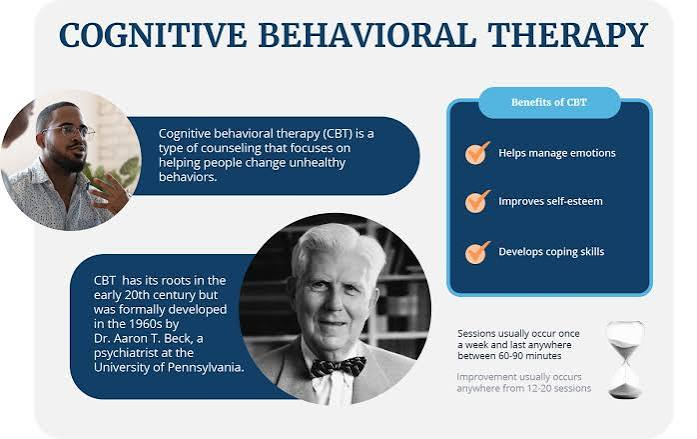
The therapy targets that loop directly. Rather than spending months exploring childhood memories, CBT focuses on identifying specific thought patterns that are currently causing problems and practicing concrete ways to respond differently. Sessions tend to be structured, goal-oriented, and relatively short-term compared to other therapeutic approaches. Most courses of CBT run between 12 and 20 sessions, though that varies depending on the complexity of what someone is working through.
The theoretical roots go back to the 1960s, when psychiatrist Aaron Beck began noticing that his depressed patients held automatic negative beliefs about themselves, the world, and the future. He found that directly examining and testing those beliefs, rather than just talking around them, produced measurable improvements. Psychologist Albert Ellis had been working on a similar model around the same time, which he called rational emotive behavior therapy. Both approaches fed into what became modern CBT.
What the Research Actually Shows
CBT is one of the most extensively studied psychological treatments in existence. The sheer volume of randomized controlled trials, meta-analyses, and longitudinal studies supporting it is unusual in the mental health field, where evidence bases can be thin. A few findings are worth knowing specifically.
- A 2012 meta-analysis published in Cognitive Therapy and Research reviewed 269 studies and found CBT produced significant effects across anxiety disorders, depression, substance use, anger management, and chronic pain.
- The National Institute on Drug Abuse recognizes CBT as an effective treatment for substance use disorders, citing its ability to help patients identify high-risk situations and develop coping strategies that reduce relapse.
- For depression specifically, research published in the journal World Psychiatry found CBT to be as effective as antidepressant medication in the short term and more effective at preventing relapse after treatment ends.
- CBT has demonstrated strong results for post-traumatic stress disorder (PTSD), with trauma-focused CBT variants showing response rates of 70 to 90 percent in several clinical trials, according to the American Psychological Association.
Numbers only tell part of the story, of course. What makes CBT particularly valuable in practice is that the skills patients learn during treatment are genuinely portable. Unlike a medication you stop taking, the cognitive tools acquired in therapy tend to stay with a person. Multiple follow-up studies have found that people who completed CBT maintain their gains better than those who received medication alone, which is a meaningful distinction when thinking about long-term recovery.
CBT in Addiction Treatment: Why It Fits
Substance use disorders are, in part, behavioral conditions driven by learned responses. A person reaches for alcohol when stressed because that pattern has been reinforced hundreds of times. The brain begins to expect relief from the substance whenever a particular trigger appears, whether that trigger is a certain time of day, a specific emotion, a social situation, or even a smell or sound. These are conditioned responses, and CBT is specifically designed to work with conditioned responses.
In addiction treatment, CBT therapists typically focus on three interconnected areas. First, functional analysis: mapping out the chain of thoughts, feelings, and circumstances that lead up to substance use. Second, skills training: building concrete alternatives to using when cravings or triggers appear. Third, relapse prevention: identifying warning signs early and having a practiced plan before a high-risk moment arrives.
People seeking cognitive behavioral therapy in Bakersfield often find that this practical, skills-based structure fits well alongside other components of a recovery program, such as group support, medication-assisted treatment, or case management services. CBT is not a standalone cure, but it addresses the cognitive layer of addiction that medication and peer support alone may not reach.
Common CBT Techniques Explained
There is sometimes a misconception that CBT is just positive thinking or journaling. The actual techniques are more specific than that, and some of them take real effort to learn. Here is a look at the most commonly used tools.
| Technique | What It Involves | Commonly Used For |
| Cognitive restructuring | Identifying distorted thoughts and testing them against evidence | Depression, anxiety, low self-worth |
| Behavioral activation | Scheduling meaningful activities to counteract withdrawal and low mood | Depression, grief, early recovery |
| Exposure therapy | Gradual, structured confrontation with feared situations or memories | Phobias, PTSD, OCD, social anxiety |
| Thought records | Written logs tracking triggers, automatic thoughts, feelings, and responses | Most presentations; builds self-awareness |
| Problem-solving training | Step-by-step approach to resolving real-life stressors that trigger symptoms | Stress-related substance use, anxiety |
| Relapse prevention planning | Identifying personal triggers and rehearsing coping responses in advance | Substance use disorders, eating disorders |
Most of these techniques involve homework between sessions. That word makes some people groan, but the assignments are usually practical and brief. A thought record might take ten minutes. A behavioral activation plan might simply mean committing to a short walk three times a week. The point is that change happens in daily life, not just in the therapy room, and CBT is built around that reality.
Who Benefits Most From CBT
CBT works across a wide range of people, but it is especially well-suited for those who appreciate structure and are willing to actively participate between sessions. It tends to work best when a person can identify specific problems they want to address, rather than having a vague sense that something is wrong. That said, part of early CBT work is often helping someone develop enough clarity to name what they are struggling with, so the bar for entry is not as high as it might sound.
Conditions CBT Is Commonly Used to Treat
- Major depressive disorder
- Generalized anxiety disorder
- Panic disorder
- Social anxiety disorder
- Post-traumatic stress disorder
- Obsessive-compulsive disorder
- Substance use disorders, including alcohol and opioid dependence
- Eating disorders such as bulimia nervosa and binge eating disorder
- Chronic pain and health anxiety
- Insomnia, often treated through a specific adaptation called CBT-I
When CBT Might Not Be the Right First Step
CBT is not a universal answer. People in acute crisis, experiencing active psychosis, or in the early days of medically supervised detox may need stabilization before they can meaningfully engage with structured therapy. Individuals with severe trauma histories sometimes need trauma-informed preparation before diving into more intensive CBT work. A good therapist will assess these factors and adapt the approach accordingly, sometimes combining CBT with other modalities or sequencing different treatments.
What to Expect in a CBT Session
The structure of a CBT session differs from what many people imagine therapy to be. There is less free-form conversation and more of a collaborative agenda. A typical session, usually 45 to 60 minutes, tends to follow a recognizable pattern. The therapist and client check in briefly on the week, review any homework from the previous session, identify one or two specific issues to focus on, work through those issues using CBT techniques, and then assign a practical task for the coming week.
This structure can feel unfamiliar at first, especially for people who expected therapy to be mostly venting about their week. Over time, most clients appreciate the clarity. They know what they are working on and why. Progress feels measurable rather than abstract, which matters a great deal when someone is dealing with conditions that already make them feel stuck or hopeless.
The relationship between client and therapist is still central, even in a structured format. CBT is not a mechanical process where a therapist runs through a checklist. Warmth, trust, and genuine curiosity about a person’s experience are what make the techniques actually land. Research on CBT consistently identifies the therapeutic relationship as one of the strongest predictors of outcome, alongside client engagement with between-session practice.
A Practical Starting Point
Understanding how CBT works is genuinely useful, but it is worth being honest about the limits of reading about therapy versus experiencing it. The concepts can seem simple on paper and turn out to require real effort to apply in moments of high stress, craving, or emotional pain. That gap between understanding and skill is exactly what therapy is designed to close, through practice, feedback, and repetition over time.
For anyone considering this approach, the most important first step is finding a therapist who is trained in CBT and who has experience with the specific issue being addressed. Credentials to look for include licensed psychologists, licensed clinical social workers, and licensed professional counselors who specifically mention CBT in their training or practice description. Many therapists today also integrate CBT with other evidence-based approaches, such as dialectical behavior therapy or acceptance and commitment therapy, which can be a good fit depending on the individual’s needs.
The evidence for CBT has accumulated over more than five decades. It is not a trend or a brand of therapy that will be replaced by the next new thing. The core insight, that how a person thinks shapes how they feel and act, and that both can change with deliberate practice, has proven durable because it reflects something true about how human minds work. That is a solid foundation for anyone ready to start.