

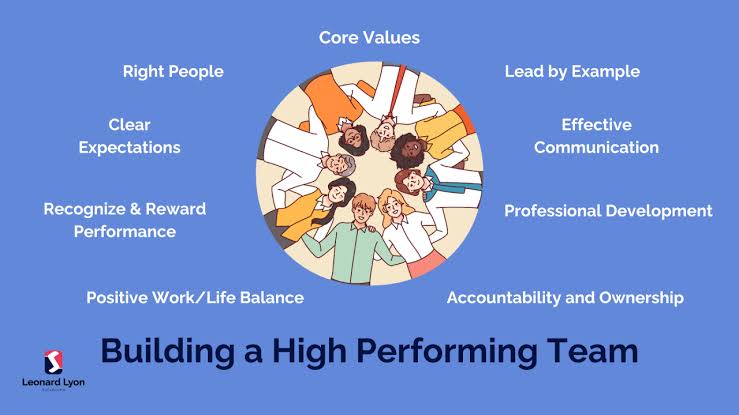
Understanding High-Performing Teams
High-performing teams are characterized by a distinct set of traits that differentiates them from average teams. At the core of a high-performing team lies an environment of trust, which fosters open communication and collaboration among all members. When team members trust one another, they are more likely to share ideas, give constructive feedback, and innovate together. This trust is cultivated through genuine relationships, transparency, and shared experiences, forming a robust foundation for team dynamics.
Accountability is another crucial characteristic of high-performing teams. Members understand their roles and the expectations placed upon them, leading to a culture where individuals take responsibility for their contributions. This accountability not only enhances individual performance but also propels team success, as members hold each other accountable in a supportive manner. Moreover, high-performing teams often set collective goals that align with organizational objectives. By committing to these shared targets, teams foster a sense of unity and purpose, which motivates each member to strive for excellence.
Furthermore, high-performing teams are adept at leveraging diverse skills and perspectives, knowing that individual strengths contribute significantly to overall team efficacy. This diversity encourages creative problem-solving and drives innovation, adding considerable value to the organization. It is through this collaboration that teams can navigate complexities effectively, adapting to changing circumstances and delivering superior outcomes.
In essence, high-performing teams play a pivotal role in achieving organizational success. Their ability to work cohesively and face challenges head-on allows them to surpass standard expectations, resulting in heightened productivity and efficiency. As organizations strive for greatness, understanding and fostering high-performing teams is essential for sustained success.
The Importance of Clear Goals and Roles
In any team dynamic, the establishment of clear goals and well-defined roles is paramount to achieving success. When team members understand the objectives of their collective effort, it allows for a more focused approach to the tasks at hand. Setting specific, measurable, achievable, relevant, and time-bound (SMART) goals is a strategic way to convey expectations and foster a shared vision among the team.
The clarity in objectives not only enhances team focus but also serves as a significant motivational factor. When individuals are aware of what they are working toward, they tend to experience increased engagement and enthusiasm. This motivates team members to contribute their best efforts, as they can clearly see how their work aligns with the overall team objectives. Moreover, when team members have the ability to track progress towards these goals, it generates a sense of ownership and accountability, inspiring them to take responsibility for their contributions.
Furthermore, the definition of individual roles within a team is critical to the collaborative process. When each member understands their specific responsibilities, it minimizes confusion and overlap, streamlining efforts. This role clarity allows team members to leverage their unique strengths and skills, fostering an environment where collaboration thrives. The specific delineation of roles can also lead to an increase in productivity, as individuals can focus on their designated tasks without distraction.
In conclusion, the importance of clearly defined goals and roles cannot be overstated. They play a vital role in enhancing focus, boosting motivation, and fostering accountability among team members. By investing effort into establishing these parameters, teams can significantly improve their performance and achieve their desired outcomes efficiently.
Recruiting the Right Talent
Building a high-performing team begins with the effective recruitment of individuals who not only possess the requisite skills but also align with the organization’s goals and culture. An organization can harness substantial advantages by selecting the right talent through a systematic approach. It is essential first to define the specific skills and competencies required for each role, taking into consideration the overall objectives of the team and the organization.
Recruitment strategies should incorporate comprehensive assessments that extend beyond technical expertise. Evaluating candidates for their mindset and cultural fit is vital in fostering a cohesive and productive team environment. For instance, behavioral interviews can yield insights into how potential hires solve problems, collaborate with others, and handle conflicts. Incorporating situational judgment tests may also provide valuable information about a candidate’s decision-making processes and alignment with core values.
Moreover, organizations should leverage diverse recruitment channels to reach a broader talent pool. Networking at industry events, utilizing social media platforms, and collaborating with educational institutions can enhance visibility and attract suitable candidates. Implementing an inclusive hiring process also plays a crucial role in cultivating a diverse workforce, which has been linked to increased innovation and improved performance.
Fostering a strong employer brand is equally important in attracting the right talent. Candidates today are more inclined to evaluate their potential employers’ values and work environments. Therefore, communicating the company culture through engaging job descriptions and authentic content on various platforms enhances the likelihood of appealing to candidates who share similar values and aspirations.
The careful selection of individual team members ultimately culminates in the formation of a high-performing team, capable of achieving sustained success. The right mix of skills, mindset, and cultural compatibility reinforces the foundation necessary for collaboration, innovation, and overall performance, making it imperative for organizations to prioritize effective recruitment strategies.
Fostering Open Communication
Effective communication is a cornerstone of a high-performing team, significantly influencing overall team dynamics and success. Different communication styles characterize how individuals express their thoughts, feelings, and ideas. Understanding these styles allows team members to engage in more productive discussions. The main styles include assertive, passive, aggressive, and passive-aggressive. Encouraging team members to recognize and adapt to each other’s communication preferences fosters cooperation and mutual respect.
Active listening plays a crucial role in open communication. This involves more than merely hearing what others say; it requires understanding, interpreting, and responding thoughtfully. Team members should practice techniques such as summarizing what others have shared, asking clarifying questions, and providing feedback that demonstrates they value their colleagues’ input. By doing so, they can create a supportive environment that champions collaboration and enhances team performance.
To cultivate an atmosphere conducive to open communication, team leaders must prioritize psychological safety. This means ensuring that team members feel comfortable expressing their ideas, concerns, and feedback without fear of negative repercussions. One effective strategy is to encourage regular check-ins and feedback sessions where team members can share their thoughts and insights. Additionally, openly celebrating contributions and encouraging constructive criticism can help reinforce a culture of open dialogue.
Moreover, utilizing tools and platforms that facilitate communication can enhance collaboration, especially in teams that are distributed across various locations. Technology brings team members together, allowing for seamless interaction and sharing of ideas, no matter where they may be physically situated. By recognizing the importance of communication styles and emphasizing active listening, leaders can effectively foster an environment where every team member feels empowered to contribute, ultimately driving the success of their high-performing team.
Encouraging Collaboration and Trust
Building a high-performing team necessitates fostering an environment of collaboration and trust. Such an environment promotes not only efficient teamwork but also encourages innovation and accountability among team members. The first step toward this goal is to implement structured team-building exercises that enhance communication and understanding. These activities should be designed to gradually build rapport and allow individuals to learn about each other’s strengths and weaknesses.
Moreover, establishing norms of respect and support is crucial. Team members should be encouraged to express their ideas openly and respect differing opinions. This creates a culture where everyone feels valued, which is paramount in enhancing collaboration. For instance, regular feedback sessions can be integrated into project timelines to provide safe spaces for discussions and encourage constructive criticism. In these forums, individuals can learn from mistakes and triumphs alike, paving the way for collective improvement.
Additionally, embracing vulnerability within the team can significantly strengthen bonds among members. When leaders model vulnerability by sharing their challenges and uncertainties, it can notably lower barriers between team members. This openness not only humanizes the work experience but also fosters empathy and deeper connections among team members. Moreover, creating an environment where personal sharing is accepted and encouraged allows individuals to feel safe in taking risks and expressing creativity without the fear of judgment.
In summary, steering a team towards collaboration and trust is not merely about achieving immediate project goals; rather, it is about creating a sustainable work dynamic that promotes long-term success. By incorporating effective team-building exercises, establishing respectful norms, and nurturing vulnerability, teams can develop strong foundations that facilitate ongoing cooperation and trustworthiness, ultimately contributing to the collective achievement of the team’s objectives.
Leveraging Diversity and Inclusion
In today’s dynamic business environment, harnessing the benefits of diversity and inclusion within a team is essential for optimizing performance and innovation. Having a diverse team not only encompasses various demographics such as race, gender, and age, but also includes a rich tapestry of experiences, skills, and perspectives. When team members hail from different backgrounds, they naturally bring unique viewpoints to problem-solving and decision-making processes. This variety can spur creativity and lead to more innovative solutions, as it challenges conventional thinking and encourages alternative approaches.
Moreover, fostering an inclusive culture is instrumental in ensuring that every team member feels valued and empowered to contribute. Inclusion involves actively engaging all voices within the team, promoting an atmosphere where everyone can share their insights without fear of judgment. This level of engagement boosts morale and enhances collaboration, leading to improved overall performance. When team members feel recognized and included, their commitment to the organization’s goals deepens, often resulting in higher productivity and job satisfaction.
To effectively leverage diversity and inclusion, organizations can implement specific strategies. Firstly, promoting open communication is crucial; this can be achieved through regular team meetings where everyone is encouraged to share their ideas. Secondly, training programs focused on diversity awareness and inclusivity practices can be beneficial, helping team members understand unconscious biases and their impacts on team dynamics. Additionally, establishing mentorship programs can be an excellent way to foster relationships among team members from diverse backgrounds, facilitating learning and growth.
In conclusion, prioritizing diversity and inclusion not only cultivates a more harmonious work environment but also drives exceptional performance and innovation. As organizations strive for success, embracing the values of diversity and inclusion can create competitive advantages that are vital in today’s global market.
Continuous Learning and Development
In today’s dynamic business environment, fostering a culture of continuous learning within a team is essential for maintaining high performance. Continuous learning not only enhances individual skills but also contributes to the overall capability of the team, allowing it to adapt to changing circumstances and challenges.
Various methods can be employed to promote professional development and learning. For instance, workshops and seminars can provide team members with fresh insights and skills pertinent to their roles. These events can be tailored to address specific areas of improvement, thus ensuring that the content is directly relevant and immediately applicable to the team’s objectives.
Mentorship programs are another effective strategy for continuous development. By pairing experienced employees with newer team members, organizations can facilitate knowledge transfer, allowing newcomers to benefit from the experience of their mentors. This approach not only encourages a culture of collaboration but also fosters stronger interpersonal relationships within the team.
Moreover, incorporating technology into the learning process can be highly beneficial. E-learning platforms and online courses offer flexible, on-demand training options that accommodate different learning paces and styles. They enable team members to pursue their learning objectives conveniently, thus keeping their skills fresh and aligned with industry standards.
Additionally, encouraging feedback and peer-driven learning can significantly enhance a culture of continuous improvement. Regularly scheduled feedback sessions, where team members can share knowledge and strategies, contribute to a cycle of growth that benefits the entire team. This not only improves individual performance but also strengthens the camaraderie and collaborative spirit within the team.
Recognizing and Rewarding Achievements
In any organization, recognizing and rewarding achievements is crucial for maintaining high team morale. When employees feel valued for their contributions, they are more likely to remain engaged and motivated in their work. Recognition serves not only as a form of appreciation but also as an acknowledgement of the hard work and dedication displayed by team members. By implementing effective reward systems, organizations can significantly enhance their workforce’s motivation and productivity.
There are various methods through which organizations can acknowledge accomplishments, ranging from formal to informal practices. For instance, celebrating milestones and achievements through company-wide meetings or newsletters allows everyone to appreciate the contributions of individual team members. Such recognition fosters a sense of camaraderie and encourages others to strive for excellence. Furthermore, small gestures, like verbal affirmations or personalized thank-you notes, can leave a lasting impact, making employees feel genuinely appreciated.
In addition to public acknowledgments, tangible rewards, such as bonuses, gift cards, or additional time off, can significantly motivate team members. These incentives create a sense of achievement and foster a competitive spirit, encouraging employees to perform at their best. Furthermore, offering opportunities for professional development or sponsoring team-building activities can serve as long-term rewards that enhance both individual and team growth.
Moreover, organizations should embrace diversity in recognition practices. Tailoring reward systems to accommodate different individual preferences can amplify their effectiveness. Not all employees respond to the same forms of recognition, and understanding these nuances can lead to a more harmonious workplace. By creating an atmosphere of appreciation and recognition, teams can maintain high morale and a strong sense of purpose that drives them toward success.
Evaluating Team Performance and Progress
Regular assessment of team performance is critical for maintaining high levels of engagement and productivity within any organization. Evaluating team performance involves utilizing various metrics that allow team leaders and members to identify strengths, weaknesses, and areas for improvement. Observational data, quantitative metrics, and qualitative feedback all serve as valuable tools in this evaluation process.
Key metrics for evaluation may include individual output, quality of work, adherence to deadlines, and the overall impact of the team’s collective efforts on broader organizational objectives. Additionally, tracking team dynamics and interpersonal relationships can shed light on communication patterns and collaboration effectiveness, which are fundamental to team success.
Feedback plays an essential role in the evaluation process. Constructive feedback encourages team members to reflect on their contributions critically and fosters a culture of open communication. It is important to differentiate between formal and informal feedback, ensuring that team members receive guidance regularly, not just during scheduled performance reviews. This consistent flow of feedback can help maintain motivation levels and facilitate personal and professional growth.
Implementing effective performance reviews is pivotal in a structured evaluation process. Performance reviews should be conducted periodically—quarterly or biannually—to allow adequate time for team members to absorb and act upon feedback. During these reviews, specific, measurable, achievable, relevant, and time-bound (SMART) goals can be established for each individual, aligning personal aspirations with the team’s objectives. By providing a clear framework for assessing individual and team performance, leaders can ensure that all members are aligned and moving forward towards success.
Ultimately, the goal of regularly evaluating team performance and progress is to foster continuous improvement, which is essential for maintaining a high-performing team. This process not only enhances individual accountability but also contributes significantly to the overall effectiveness of the team as a whole.