

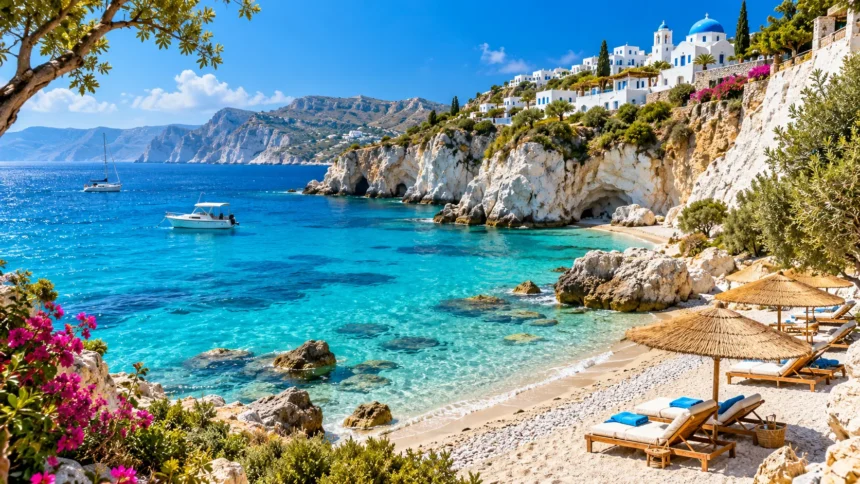
Greece is one of the most beautiful beach destinations in Europe, famous for its turquoise waters, golden sand, dramatic cliffs, and charming coastal villages. With thousands of islands and an extensive mainland coastline, the country offers countless places to enjoy the Mediterranean sunshine. From secluded coves to lively seaside resorts, every coastal destination has something unique to offer.
Finding the best beach in Greece depends on the type of holiday you want. Some beaches feature unusual pink sand and shallow lagoons, while others are surrounded by towering cliffs and spectacular natural landscapes. Whether you prefer peaceful relaxation, family-friendly swimming spots, or scenic coastal adventures, Greece has a destination that matches your interests.
This guide explores the best beaches in Greece, including famous destinations in Crete, Zakynthos, Kefalonia, Lefkada, and other beautiful locations. You will discover what makes each beach special, the experiences available, and practical tips for planning your visit. These coastal destinations offer unforgettable opportunities to experience Greece’s remarkable natural beauty.
1. Elafonissi Beach, Crete: Best for Pink Sand and Shallow Water
Elafonissi Beach is one of the most famous beaches in Greece, located on the southwestern coast of Crete. It is particularly recognized for its beautiful turquoise lagoon, pale sand, and occasional pinkish shoreline. The unusual pink color comes from tiny fragments of marine shells, creating a striking natural landscape that attracts photographers and beach lovers.
The beach features shallow areas where visitors can enjoy the beautiful surroundings and observe the changing colors of the water. Sandbars connect different sections of the coastal landscape, while protected natural areas support interesting plant and animal species. Its combination of soft sand and stunning scenery makes Elafonissi especially popular during the warmer months.
Elafonissi is approximately 75 kilometers from Chania, and visitors can reach it by road or suitable organized excursions. Summer can bring large crowds, so arriving earlier in the day may provide a quieter experience. Because the area is environmentally protected, visitors should avoid removing sand or shells and respect the surrounding natural habitat.
2. Navagio Beach, Zakynthos: Best for Iconic Coastal Scenery
Navagio Beach, also known as Shipwreck Beach, is one of Greece’s most recognizable coastal landmarks. Located on the island of Zakynthos, the beach is surrounded by towering limestone cliffs and brilliant blue Ionian waters. Its famous shipwreck, resting on the shoreline since 1980, has become a distinctive feature of this spectacular natural setting.
The dramatic landscape makes Navagio especially popular among photographers and visitors interested in coastal sightseeing. The contrast between white cliffs, turquoise water, and the historic wreck creates an unforgettable scene. Boat excursions around the coastline provide opportunities to admire the surrounding cliffs, while authorized viewpoints offer impressive panoramic views of the bay.
Navagio Beach remains closed to visitors for safety reasons, and landing on the shoreline is prohibited as of 2026. Travelers should not attempt to access restricted areas or unstable cliff edges. Depending on current regulations and conditions, authorized boat sightseeing may still be available. Check local restrictions before planning a visit to this remarkable landmark.
3. Myrtos Beach, Kefalonia: Best for Dramatic Mountain Views
Myrtos Beach is one of the most photographed beaches in Greece, situated on the northwestern coast of Kefalonia. The beach lies beneath impressive green mountains and steep limestone cliffs that create a dramatic natural setting. Its beautiful white pebbles and deep blue Ionian waters make it an outstanding destination for travelers who appreciate remarkable coastal landscapes.
The elevated viewpoints above Myrtos offer breathtaking panoramic views of the curved shoreline and surrounding mountains. Visitors can admire the changing colors of the sea as sunlight moves across the water. The beach itself provides an attractive setting for relaxing, taking photographs, and enjoying the peaceful atmosphere of Kefalonia’s impressive western coastline.
Myrtos is accessible by road, although the winding approach requires careful driving. The beach is exposed to open-sea conditions, and waves can become powerful during windy weather. Travelers should follow local swimming warnings and avoid entering rough water. For the most memorable photographs, consider visiting a designated viewpoint when the afternoon light illuminates the coastline.
4. Balos Lagoon, Crete: Best for Turquoise Waters and Natural Beauty
Balos Lagoon is among the most spectacular coastal destinations in Greece, located on the northwestern coast of Crete. The area is famous for its shallow turquoise water, pale sand, and extraordinary landscape between Cape Tigani and the Gramvousa Peninsula. Its unusual coastal formations create a tropical appearance that makes Balos popular with visitors from around the world.
The lagoon offers numerous opportunities for enjoying scenic views, photography, and exploring the surrounding natural environment. From higher viewpoints, visitors can admire the striking combination of white sand, greenish-blue water, and rugged hills. The area is environmentally significant, supporting protected habitats and wildlife that contribute to its distinctive natural character.
Visitors can reach Balos through authorized boat excursions from Kissamos or by road followed by walking along designated routes. Road conditions can be challenging, so travelers should prepare carefully before choosing a driving option. Summer brings significant visitor numbers, making early planning helpful. Respecting protected habitats and carrying essential supplies will improve your experience.
5. Porto Katsiki Beach, Lefkada: Best for Impressive White Cliffs
Porto Katsiki Beach is one of Lefkada’s most famous attractions, known for its towering white cliffs and brilliant turquoise waters. Located on the southwestern coast of the island, it offers one of the most dramatic coastal landscapes in the Ionian Sea. The contrast between steep limestone formations and the beautiful shoreline makes it particularly appealing to photographers.
The beach provides stunning ocean views and a memorable atmosphere surrounded by natural scenery. Visitors can admire the coastline from elevated viewpoints or explore permitted beach areas when conditions allow. Its relatively remote location contributes to the feeling of discovering a special destination away from Greece’s larger coastal resort towns and busy city beaches.
Access arrangements can involve steep steps and may change because of safety restrictions or maintenance. Visitors should check current local guidance before traveling and avoid unstable cliff areas. Facilities may be limited, so bringing drinking water and sun protection is sensible. Porto Katsiki is particularly rewarding for travelers who enjoy beautiful scenery and dramatic coastal photography.
6. Sarakiniko Beach, Milos: Best for Unique Volcanic Landscapes
Sarakiniko Beach is one of the most unusual coastal attractions in Greece, located on the beautiful island of Milos. Unlike traditional sandy beaches, Sarakiniko features smooth white volcanic rock formations shaped by wind and sea erosion. These striking geological features create a landscape that resembles the surface of another planet, attracting photographers and curious travelers.
The brilliant white rocks contrast beautifully with the deep blue waters of the Aegean Sea. Visitors can explore safe designated areas, admire fascinating rock formations, and enjoy uninterrupted coastal views. The unusual scenery makes Sarakiniko especially popular during sunrise and sunset, when changing light creates beautiful shadows across the distinctive volcanic landscape.
Sarakiniko is accessible by road from nearby areas of Milos, making it relatively convenient to include in an island itinerary. However, the smooth rocks can become slippery, and the coastline is exposed to changing sea conditions. Visitors should avoid cliff jumping and other risky activities. Comfortable footwear and sun protection are useful when exploring the rocky terrain.
7. Voidokilia Beach, Peloponnese: Best for Peaceful Natural Surroundings
Voidokilia Beach is a beautiful coastal destination in the southwestern Peloponnese, famous for its distinctive horseshoe-shaped shoreline. The beach forms an almost perfect semicircle of pale sand surrounding clear blue water. Its unusual shape and natural surroundings create a peaceful atmosphere that attracts visitors looking for beautiful scenery away from heavily developed resort areas.
The beach is located near important protected natural habitats, including the Gialova Lagoon, which supports numerous bird species. Visitors can enjoy scenic walks, observe the surrounding landscape, and admire the beautiful coastline from appropriate viewpoints. The nearby area also contains historical attractions, making Voidokilia an interesting destination for combining nature with cultural sightseeing.
Facilities at Voidokilia are limited, so travelers should bring drinking water and other essentials. The beach is particularly attractive during spring and early autumn when temperatures can be comfortable for exploring. Visitors should avoid disturbing wildlife and respect local environmental protections. Its remarkable natural beauty makes Voidokilia a wonderful destination for a quieter Greek beach holiday.
8. Simos Beach, Elafonisos: Best for Golden Sand and Clear Water
Simos Beach is one of the most beautiful sandy beaches in Greece, situated on the small island of Elafonisos near the southeastern Peloponnese. Famous for its golden sand, turquoise water, and impressive dunes, the beach offers an unforgettable Mediterranean setting. Its picturesque coastline attracts travelers who enjoy peaceful surroundings and scenic seaside relaxation.
The beach is divided into connected coastal sections, creating attractive sandy bays surrounded by natural vegetation. Visitors can admire beautiful ocean views and enjoy the soft sand along the shoreline. The surrounding dunes and rare coastal plants contribute to the area’s natural appeal, making environmental protection especially important for maintaining its exceptional beauty.
Travelers generally reach Elafonisos by taking a short ferry crossing from the mainland near Pounta. Once on the island, Simos is accessible by local roads. During summer, the beach becomes popular, particularly on weekends and public holidays. Arriving early and respecting protected dune areas can help visitors enjoy this remarkable coastal destination more comfortably.
9. Agios Prokopios Beach, Naxos: Best for Family Beach Holidays
Agios Prokopios Beach is one of the most popular coastal destinations on Naxos, known for its long sandy shoreline and beautiful blue Aegean waters. Located a short distance from Naxos Town, it offers a convenient combination of natural scenery and tourist facilities. Its accessibility makes it particularly attractive to families and visitors planning relaxing island holidays.
The beach features areas with organized facilities, including nearby cafés, restaurants, and accommodation options. Visitors can enjoy walking along the shoreline, admiring the coastal views, and exploring the surrounding resort area. Its beautiful sandy setting and convenient services make it an appealing choice for travelers who prefer comfortable beach holidays without complicated transportation arrangements.
Agios Prokopios is easily reached from Naxos Town by road or seasonal local transportation services. Summer offers warm weather and a lively atmosphere, although popular sections can become crowded. Travelers should choose supervised swimming areas when available and pay attention to changing winds. The beach is particularly suitable for visitors seeking convenience and classic Greek island scenery.
10. Paleokastritsa Beach, Corfu: Best for Scenic Bays and Coastal Villages
Paleokastritsa is one of the most beautiful coastal areas on Corfu, famous for its clear waters, green hills, and picturesque bays. Located on the island’s northwestern coast, the area offers several small beaches surrounded by dramatic natural landscapes. Its combination of rocky headlands and turquoise coves makes it especially attractive for photography and peaceful coastal sightseeing.
Visitors can explore the traditional seaside atmosphere, admire beautiful viewpoints, and discover the historic Paleokastritsa Monastery overlooking the coastline. The surrounding area contains restaurants, accommodation, and opportunities for authorized boat sightseeing. Small bays provide different coastal experiences, allowing travelers to appreciate the varied scenery that makes this region of Corfu so distinctive.
Paleokastritsa is accessible by road from Corfu Town, making it suitable for both day trips and longer stays. Some beaches have pebbles rather than soft sand, so suitable footwear can be helpful. Coastal conditions and available facilities vary between locations. Travelers seeking attractive seaside villages, green hills, and beautiful Mediterranean waters will appreciate this destination.
11. Best Time to Visit the Beaches in Greece
The best time to visit Greece for a beach holiday generally falls between late May and September. During these months, many coastal destinations experience warm temperatures and plenty of sunshine. June and September are often particularly appealing because they offer pleasant conditions while avoiding some of the intense summer crowds found during July and August.
July and August are the busiest beach tourism months, particularly on popular islands such as Crete, Mykonos, and Zakynthos. Accommodation prices can rise, and famous beaches may become crowded during the middle of the day. Travelers who prefer quieter surroundings should consider shoulder-season visits, although water temperatures and seasonal facilities vary across different islands.
Weather conditions also influence the best time for coastal sightseeing and swimming. Some Aegean islands experience strong summer winds, while Ionian destinations may have different local weather patterns. Visitors should check forecasts, ferry schedules, and beach access information before traveling. Planning according to your preferred activities helps create a more relaxing and enjoyable Greek island holiday.
Conclusion
Greece offers some of the most beautiful beaches in Europe, featuring spectacular cliffs, clear turquoise waters, sandy lagoons, and remarkable natural landscapes. From the pink-tinged shores of Elafonissi to the dramatic scenery of Myrtos and Porto Katsiki, every destination offers something memorable. The country’s coastal diversity makes it ideal for different types of beach holidays.
Travelers looking for beautiful sandy surroundings may prefer Simos Beach or Agios Prokopios, while photography enthusiasts will appreciate Balos Lagoon and Sarakiniko. Paleokastritsa offers attractive coastal villages, and Voidokilia provides a peaceful natural setting. Famous destinations such as Navagio are also worth admiring from authorized viewpoints, even when direct beach access is restricted.
Choosing the best beach in Greece ultimately depends on your preferred scenery, travel season, and holiday expectations. Some destinations offer comfortable facilities, while others are better suited to scenic exploration and nature appreciation. Whether you visit Crete, the Ionian Islands, or the Peloponnese, Greece’s remarkable coastline promises beautiful landscapes and unforgettable Mediterranean experiences.
Frequently Asked Questions
What is the most beautiful beach in Greece?
Elafonissi Beach, Balos Lagoon, and Myrtos Beach are among Greece’s most beautiful coastal destinations. Each offers distinctive scenery, including pink-tinged sand, turquoise lagoons, dramatic cliffs, and spectacular Mediterranean views.
Which Greek island has the best beaches?
Crete is an excellent choice because it offers diverse beaches, including Elafonissi and Balos Lagoon. Lefkada, Kefalonia, Naxos, and Milos are also famous for their stunning coastal scenery.
What is the best month to visit Greece for beaches?
June and September are often ideal for Greek beach holidays because they generally offer warm weather and fewer crowds than peak summer. July and August are popular but can be expensive.
Are the beaches in Greece suitable for families?
Yes, many Greek beaches are suitable for family holidays, particularly Agios Prokopios and designated areas of Elafonissi. Families should always check local swimming conditions, available facilities, and beach safety warnings.
Is Navagio Beach in Greece open to tourists?
Navagio Beach on Zakynthos remains closed to visitors as of 2026 because of safety concerns. Landing is prohibited, although authorized sightseeing excursions and designated viewpoints may offer opportunities to admire its scenery.