
Cybersecurity is an essential part of modern technology, helping protect computers, networks, applications, and sensitive information from digital threats. As businesses and individuals depend increasingly on online services, the need for effective cybersecurity continues to grow. However, cybersecurity is not a single technology or protection method. It includes several specialized areas designed to address different security risks.
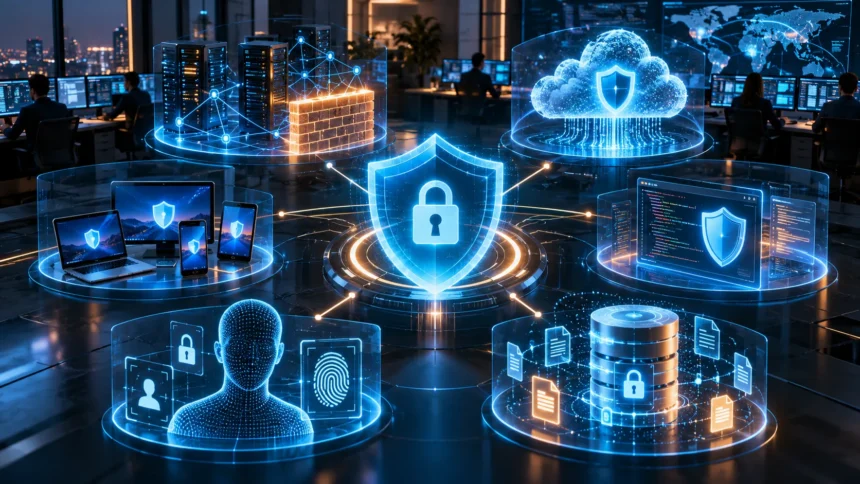
The main types of cybersecurity include network security, application security, cloud security, endpoint security, information security, and operational technology security. Other important areas include identity and access management, mobile security, IoT security, and critical infrastructure protection. Each category focuses on safeguarding particular systems, devices, or digital environments.
Understanding the different types of cybersecurity helps organizations choose appropriate protective measures and allows beginners to explore possible career specializations. This guide explains the major cybersecurity categories, how they work, common technologies, real-world examples, and why combining different security approaches is important.
What Is Cybersecurity?
Cybersecurity is the practice of protecting digital systems, computer networks, software applications, and information from unauthorized access, damage, disruption, and theft. It combines technical tools, organizational procedures, and security policies to manage digital risks. The main objective is to protect important resources while maintaining the reliability of technology systems.
Cybersecurity involves identifying potential threats, evaluating vulnerabilities, and implementing measures that reduce exposure to attacks. These measures may include firewalls, encryption, authentication systems, software updates, and monitoring technologies. Different tools protect different parts of a digital environment. Organizations must select safeguards according to their specific needs and risks.
Effective cybersecurity also depends on people and processes rather than technology alone. Employees must understand safe digital practices, while security teams monitor systems and investigate suspicious activity. Organizations develop security policies and prepare for incidents. Combining these activities creates stronger protection against changing cyber threats.
Why Are There Different Types of Cybersecurity?
Different types of cybersecurity exist because digital environments contain many technologies with distinct vulnerabilities and protection requirements. A business network faces different security challenges from a mobile application or industrial control system. Each environment requires specialized knowledge and protective controls. One security tool cannot address every possible digital threat.
For example, network security focuses on controlling communication between connected systems. Application security protects software from vulnerabilities, while cloud security addresses resources hosted on cloud platforms. Endpoint security protects individual devices such as computers and smartphones. These areas often overlap but serve different primary purposes.
Organizations benefit from understanding these distinctions when developing security strategies. Identifying the technologies that require protection helps determine which controls are necessary. It also supports effective resource allocation and risk management. Using several complementary security approaches provides broader protection than depending on one defensive measure.
Network Security
Network security protects computer networks and the information transmitted through them. It focuses on preventing unauthorized access, regulating communication, and identifying suspicious traffic. Organizations use network security to safeguard connections between computers, servers, applications, and other devices. This category is important for both small businesses and large enterprises.
Common network security technologies include firewalls, intrusion detection systems, network segmentation, and secure communication protocols. Firewalls regulate traffic according to security rules, while monitoring tools identify unusual activity. Segmentation separates network areas to limit unnecessary communication. These measures reduce exposure to certain threats and improve network visibility.
For example, a company may separate employee computers from systems containing sensitive financial information. Authorized users can access required resources through controlled connections. Security teams monitor network activity and review suspicious events. This layered approach helps protect business networks while supporting necessary communication.
Application Security
Application security focuses on protecting software applications from vulnerabilities and unauthorized activity. It applies to websites, mobile applications, desktop programs, and business software. Applications frequently process sensitive information, making secure development and maintenance essential. Security weaknesses can expose data or allow unintended operations.
Common application security practices include secure coding, code reviews, authentication, input validation, and vulnerability testing. Developers use these methods to identify potential weaknesses before software is released. Automated security tools may also help detect certain problems. Application security continues throughout the software development lifecycle.
For example, an online shopping application must protect customer accounts and payment-related information. Developers implement appropriate access controls and validate information submitted by users. Security testing helps identify weaknesses before they cause problems. Regular maintenance and software updates support ongoing application protection.
Cloud Security
Cloud security protects information, applications, and computing resources hosted on cloud platforms. Many businesses use cloud services for storage, software development, databases, and everyday operations. These environments provide flexibility but introduce security responsibilities involving access permissions, configuration, and data protection. Cloud security addresses those risks.
Common cloud security measures include identity management, encryption, activity logging, configuration monitoring, and network restrictions. Organizations must determine which users and applications can access particular cloud resources. Incorrect permissions can expose sensitive information. Regular reviews help identify configurations that may create unnecessary risks.
Cloud security generally follows a shared responsibility model between service providers and customers. The exact division depends on the type of cloud service being used. For example, customers may remain responsible for user access and data management even when infrastructure is managed by a provider. Understanding these responsibilities helps organizations protect cloud environments.
Endpoint Security
Endpoint security protects devices that connect to computer networks, including laptops, desktop computers, servers, and smartphones. These devices can become targets for malware, unauthorized access, and other cybersecurity threats. Organizations use endpoint security to reduce risks associated with individual devices. Protection is especially important when employees work across different locations.
Common endpoint security technologies include antivirus software, endpoint detection and response tools, device encryption, and operating system updates. Security platforms monitor suspicious behavior and may help investigate incidents. Device management systems also allow organizations to apply security policies consistently. These technologies support broader organizational protection.
For example, a company may require employees to use encrypted laptops with approved security software. Devices receive updates, and access to sensitive applications is restricted. If suspicious activity occurs, security teams can investigate through endpoint monitoring tools. These controls help protect both the device and connected business resources.
Information Security
Information security, often called InfoSec, focuses on protecting information from unauthorized disclosure, alteration, destruction, and disruption. It applies to both digital and physical information. The field emphasizes maintaining confidentiality, integrity, and availability. These principles help organizations determine how sensitive information should be handled and protected.
Information security includes policies, access controls, encryption, data classification, and secure storage procedures. Organizations identify important information and evaluate associated risks. Protection may involve controlling digital records or securing physical documents. Employees also receive guidance on handling confidential information appropriately.
For example, a healthcare organization may restrict access to patient records according to staff responsibilities. It may also encrypt stored data and establish procedures for handling sensitive documents. Security reviews help verify that protective measures remain appropriate. Information security therefore extends beyond individual cybersecurity technologies.
Data Security
Data security focuses specifically on protecting information throughout its lifecycle, including collection, storage, processing, transmission, and deletion. Organizations manage large amounts of customer, employee, and operational data. Protecting this information helps reduce unauthorized access and accidental exposure. Data security overlaps with information security but emphasizes safeguards applied directly to data.
Common data security methods include encryption, access controls, backup procedures, and data loss prevention technologies. Organizations may classify information according to sensitivity and apply suitable restrictions. Monitoring can identify unusual data access or transfer activity. These measures help maintain confidentiality and reduce the consequences of security incidents.
For example, an ecommerce business may store customer records in a protected database. Only authorized employees and applications receive necessary access. Encryption and monitoring provide additional safeguards. Regular backups also support recovery when information becomes unavailable or damaged.
Identity and Access Management Security
Identity and Access Management, commonly called IAM, controls who can access digital systems and what actions they are permitted to perform. It helps organizations verify user identities and manage permissions. Without effective IAM, unauthorized individuals may gain access to confidential information or important applications. This makes access management a fundamental cybersecurity function.
IAM technologies include authentication systems, multifactor authentication, single sign-on, and role-based access controls. Authentication verifies identity, while authorization determines permitted activities. Organizations can assign permissions according to job responsibilities. Regular reviews help identify unnecessary access and outdated accounts.
For example, an employee working in customer support may need access to certain service records but not financial administration systems. IAM controls help enforce these restrictions. When the employee changes roles, permissions can be updated. This reduces exposure while allowing people to complete authorized tasks.
Mobile Security
Mobile security protects smartphones, tablets, and mobile applications from unauthorized access and digital threats. These devices frequently contain personal information, financial applications, communication records, and business data. Their portability and connection to different networks introduce additional security considerations. Mobile protection addresses risks affecting both devices and information.
Common mobile security practices include device encryption, screen locks, operating system updates, and secure application management. Organizations may also use mobile device management platforms to apply security policies. App permissions should be reviewed according to actual needs. These controls reduce unnecessary exposure of personal and business information.
For example, a business may require employees to secure work-related applications using approved authentication methods. Sensitive information can be protected through encryption and access restrictions. Lost devices may require appropriate response procedures. Mobile security helps organizations support flexible work arrangements while managing digital risks.
Internet of Things (IoT) Security
Internet of Things security protects connected devices that collect information, communicate through networks, or perform automated functions. Examples include smart home equipment, connected sensors, security cameras, and industrial monitoring devices. These technologies expand digital connectivity but may have different security capabilities. IoT security helps address the resulting risks.
Common IoT security measures include secure configuration, device authentication, software updates, and network segmentation. Organizations should identify connected devices and understand how they communicate. Devices with unnecessary exposure or outdated software may create vulnerabilities. Monitoring and appropriate access restrictions help reduce these risks.
For example, a business using connected environmental sensors may separate them from sensitive administrative systems. Device access can be restricted to authorized applications and personnel. Updates are managed according to manufacturer recommendations. These practices help protect connected technology without preventing legitimate functionality.
Operational Technology (OT) Security
Operational technology security protects systems that monitor or control physical equipment and industrial processes. OT environments are common in manufacturing, energy production, water treatment, and transportation. These systems may include programmable logic controllers, industrial sensors, and automated machinery. Their security requirements often emphasize safety and continuous operation.
OT security uses network segmentation, access controls, monitoring technologies, and carefully coordinated maintenance procedures. Industrial devices may have long operational lifecycles and limited support for modern security software. Changes must therefore be evaluated for operational impact. Security professionals often collaborate closely with engineers and equipment operators.
For example, a manufacturing facility may separate industrial controllers from ordinary office networks. Only approved personnel can access critical control functions. Passive monitoring may identify unusual communication without interfering with equipment. These protective measures support reliable industrial operations and reduce security risks.
Critical Infrastructure Security
Critical infrastructure security protects technologies supporting essential services such as electricity, water, transportation, communications, and healthcare. Disruptions to these systems can affect large communities and important economic activities. Cybersecurity measures therefore play a significant role in maintaining dependable infrastructure. Physical safety and service continuity are central considerations.
Critical infrastructure environments may include industrial controllers, business systems, communication networks, and specialized operational equipment. Security teams assess risks across these interconnected technologies. Protective measures include access controls, monitoring, network segmentation, and emergency planning. Coordination between technical specialists and operational personnel is essential.
For example, a water utility may use cybersecurity controls to protect monitoring systems and restrict access to operational equipment. It may also maintain recovery procedures for service disruptions. Regular risk assessments support ongoing protection. Critical infrastructure security helps organizations maintain reliable services during changing technological conditions.
Network Access and Wireless Security
Wireless security protects communication over Wi-Fi and other wireless networking technologies. Unlike traditional wired connections, wireless signals travel through the surrounding environment. This creates additional considerations involving authentication, encryption, and unauthorized network access. Protecting wireless connections is important for homes, workplaces, and public facilities.
Common wireless security measures include modern encryption protocols, strong authentication, firmware updates, and appropriate network configurations. Organizations may also separate guest wireless access from internal business systems. Monitoring can help identify unfamiliar devices or unexpected connection activity. These controls support safer wireless communication.
For example, a business may provide separate wireless networks for employees and visitors. Employee connections use approved authentication methods, while guest access remains restricted. Network administrators regularly review configurations and update supported equipment. This arrangement supports connectivity while reducing unnecessary access to sensitive resources.
Internet and Web Security
Internet security protects users, applications, and information from threats encountered through online services. These risks may involve phishing, deceptive websites, malicious downloads, or unsafe communication. Internet security combines browser protection, secure connections, authentication, and user awareness. It is important for individuals and organizations.
Common protective measures include secure web gateways, email filtering, encrypted connections, and browser security features. Organizations may also restrict access to known malicious websites. Regular software updates help address vulnerabilities in browsers and related applications. Users should verify unexpected requests before sharing sensitive information.
For example, an employee may receive a suspicious message that appears to come from a familiar service. Email filtering may identify the message, while security awareness helps the employee avoid unsafe actions. Multifactor authentication can provide additional account protection. These measures help reduce common internet-related risks.
Email Security
Email security protects electronic communication from unauthorized access, phishing, malware, and other threats. Email is widely used for business and personal communication, making it an important cybersecurity concern. Malicious messages may attempt to deceive recipients or expose sensitive information. Effective email protection combines technical filtering with informed user behavior.
Common email security measures include spam filtering, sender authentication, attachment scanning, and secure account access. Technologies such as SPF, DKIM, and DMARC help organizations authenticate sending domains and manage certain impersonation risks. Multifactor authentication protects email accounts against some unauthorized access attempts. These technologies address different aspects of email security.
For example, a company may configure email authentication and filtering to reduce suspicious incoming messages. Employees receive training to recognize unusual requests and misleading links. Security teams investigate reported messages when necessary. Combining these safeguards helps protect organizational communication.
Cybersecurity Risk Management
Cybersecurity risk management involves identifying, evaluating, and addressing potential threats to digital systems and information. Organizations cannot eliminate every security risk, so they must prioritize protective measures. This process considers important assets, vulnerabilities, potential consequences, and existing controls. It supports informed decisions about cybersecurity investments.
A risk assessment may identify sensitive customer information, critical applications, or important business services. Security professionals examine how these resources could be affected by threats or operational weaknesses. They then recommend appropriate safeguards. Risk treatment may involve reducing exposure, transferring certain risks, accepting manageable risks, or avoiding particular activities.
Risk management requires continuous review because technologies and business requirements change. Organizations may introduce new applications, cloud services, or connected devices. These changes can affect existing security assumptions. Regular assessments help ensure protective measures remain relevant and proportionate to organizational needs.
Security Operations and Threat Detection
Security operations involve monitoring digital environments to identify, investigate, and respond to suspicious activity. Organizations may operate dedicated Security Operations Centers, commonly called SOCs. These teams examine information from networks, devices, applications, and security platforms. Their work supports ongoing awareness of potential cyber threats.
Security Information and Event Management systems, often called SIEM platforms, help collect and analyze security-related records. Endpoint monitoring and network detection tools provide additional information. Security analysts review alerts and determine whether unusual activity requires investigation. Not every alert represents an actual security incident.
Security operations depend on cooperation between technology, personnel, and procedures. Analysts need accurate information and clear response responsibilities. Automated tools can assist with organizing alerts and identifying patterns, but human judgment remains important. Effective monitoring helps organizations respond to potential threats more consistently.