

Understanding Pricing Strategy
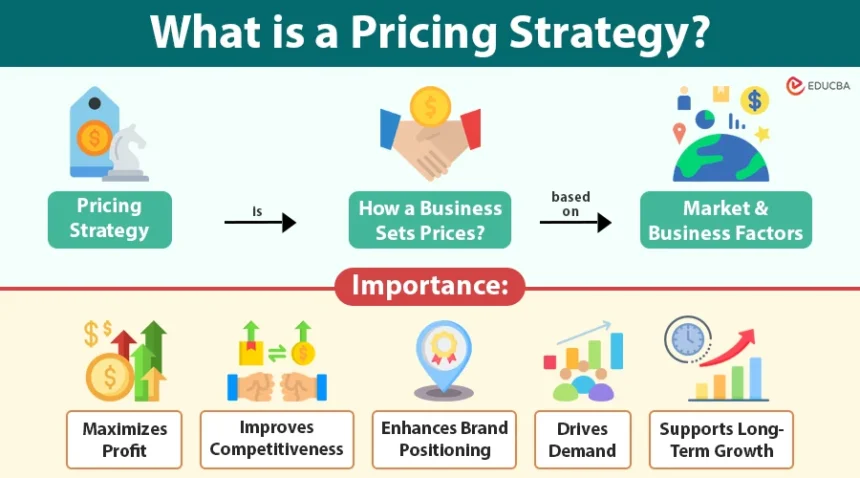
A pricing strategy plays a crucial role in the overall business strategy, influencing both market positioning and profitability. It entails the method through which a business sets the prices for its products or services, aiming to achieve specific goals such as increasing market share, maximizing revenue, or establishing a competitive advantage. The importance of a well-defined pricing strategy cannot be overstated, as it serves as a critical lever in the financial performance of a company.
Several factors impact pricing decisions, including production costs, competitor pricing, customer demand, and market trends. For instance, understanding the cost structure of a product is vital, as it helps ensure that prices cover expenses while allowing for profit generation. Additionally, businesses must monitor competitor pricing to position their offerings effectively. A responsiveness to customer demand, which can fluctuate, is also essential; businesses need to consider customer preferences and willingness to pay in their pricing models.
The impact of a carefully formulated pricing strategy on profitability is substantial. A strategic approach can lead to optimized sales and minimize wasted resources. For example, utilizing pricing models such as cost-plus pricing, value-based pricing, or dynamic pricing can align prices more closely with market conditions and customer expectations. Hence, an effective pricing strategy not only enhances revenue generation but also supports long-term business sustainability.
Ultimately, understanding pricing strategy encompasses recognizing its influence on consumer behavior, fostering brand loyalty, and adjusting to changes in the competitive landscape. By situating pricing decisions within the wider context of business objectives, companies can leverage pricing as a strategic tool to drive growth and profitability.
Identifying Your Market and Customer Segments
Understanding your target market is fundamental to developing a successful pricing strategy. It begins with thorough market research, which allows businesses to identify the demographics, behaviors, and preferences of potential customers. Key techniques for conducting effective market research include surveys, focus groups, and analyzing industry reports. These methods not only provide insights into customer needs but also help identify gaps in the market, which can be crucial for positioning your product effectively.
Once the general target market is defined, the next step is segment profiling. Segment profiling involves categorizing customers based on various criteria such as age, income, location, and buying behaviors. By segmenting the market, businesses can tailor their pricing strategies to meet the specific expectations and willingness to pay of different customer groups. For instance, premium pricing may be attractive to a segment that values exclusivity, while competitive pricing may appeal more to cost-conscious shoppers.
Additionally, the creation of customer personas plays a significant role in understanding different segments. A customer persona is a detailed, semi-fictional representation of a typical customer within a segment. It encompasses factors such as personal backgrounds, motivations, and buying habits. By developing these personas, businesses can gain deeper insights into what drives each segment’s purchasing decisions. This knowledge will inform how to align product offerings and pricing strategies with customer expectations, ultimately enhancing the chances of achieving a higher conversion rate.
In conclusion, the integration of market research, segment profiling, and customer personas is essential for creating a profitable pricing strategy. By understanding the nuances of each segment and their specific needs, businesses can craft pricing approaches that resonate with their target audience, ensuring sustainable success.
Cost Analysis: Understanding Your Break-Even Point
Conducting a thorough cost analysis is essential for any business looking to establish a profitable pricing strategy. A comprehensive cost analysis involves evaluating both fixed and variable costs. Fixed costs are those that remain constant regardless of the level of output, such as rent, salaries, and insurance. In contrast, variable costs fluctuate with production levels, including raw materials, labor, and shipping. Understanding these costs is paramount, as they directly influence the pricing of products or services.
One key component of cost analysis is determining the break-even point. The break-even point represents the level of sales at which total revenues equal total costs, meaning there is neither profit nor loss. To calculate the break-even point, one must first determine the contribution margin per unit, which is the selling price per unit minus the variable cost per unit. By dividing the fixed costs by the contribution margin per unit, businesses can identify the number of units they need to sell to cover their costs. Sellers who already know their numbers can compare them against weekly product intelligence, which shows each product’s cost, selling price, and break-even CPA.
Knowing the break-even point offers several advantages for pricing strategy. It allows business owners to set pricing thresholds based on informed decisions rather than assumptions. For instance, if the calculated break-even volume is too high relative to market demand, this may suggest that either the pricing needs to be adjusted or costs need to be reduced. Additionally, understanding the break-even analysis serves as a foundation for evaluating profitability; any sales beyond the break-even point contribute directly to profit, amplifying the urgency to strive for sales growth.
In conclusion, a meticulous cost analysis, paired with a solid understanding of the break-even point, empowers business owners to make strategic pricing decisions that enhance profitability and market competitiveness.
Pricing Models: Choosing the Right One for Your Business
When developing a profitable pricing strategy, selecting the appropriate pricing model is crucial. Different models offer unique benefits and challenges, influencing both revenue generation and customer perceptions. Below, we explore prominent pricing models to help businesses make informed decisions.
Cost-Plus Pricing is one of the simplest pricing strategies, where pricing is set by adding a fixed percentage to the total cost of production. This model ensures that all costs are covered while providing a profit margin. However, it does not consider competitors’ prices or customer willingness to pay, potentially leading to missed revenue opportunities.
Value-Based Pricing focuses on the customer’s perception of value rather than the cost of the product. Pricing is set based on what the target market is willing to pay, taking into account the benefits and the unique features of the offering. This strategy can yield high-profit margins if executed correctly but requires thorough market research to understand customer needs and preferences.
Dynamic Pricing adjusts prices in real-time based on market demand, customer behavior, and other external factors. Common in industries like hospitality and e-commerce, it allows businesses to maximize revenues by charging higher prices during peak demand periods while providing discounts during low demand. However, this model can confuse customers and lead to dissatisfaction if not implemented transparently.
Finally, the Subscription Pricing model charges customers a recurring fee for continuous access to a product or service. This approach can create a steady revenue stream and foster customer loyalty. Nonetheless, it requires ongoing value delivery to retain customers and minimize churn.
Ultimately, the choice of a pricing model should consider your business type, specific market conditions, and customer behavior. A comprehensive understanding of these factors will enable you to select a pricing strategy that not only attracts customers but also sustains profitability over time.
Competitive Pricing: Analyzing the Competition
In today’s dynamic market, understanding the competitive landscape is critical for developing an effective pricing strategy. Competitive pricing entails analyzing how competitors price their products or services, which is essential for assessing one’s market position. This analysis not only helps to determine pricing trends but also provides insights into the perceived value of offerings within the industry. To conduct a competitive analysis, businesses should identify key competitors, gather data on their pricing structures, and evaluate how these prices align with the value delivered. Online tools and market research reports can be invaluable in this process.
Once sufficient information on the competitors’ pricing has been collected, it is essential to evaluate this data in relation to one’s own products or services. Are the competitors offering similar quality? What additional features or benefits do they provide? Understanding these nuances allows companies to determine whether they should adopt a strategy of undercutting, matching, or differentiating their pricing. For instance, if the competitive analysis indicates that rival offerings lack certain features, this can provide a compelling reason to maintain or even increase price points, firmly establishing a value-driven brand position.
It is also worth noting that price positioning is not a one-size-fits-all approach. Factors such as brand perception, customer demographics, and overall market trends should inform the strategic decisions made. Companies may decide to underprice for quick market penetration or opt for premium pricing to reinforce a luxury image. Ultimately, the goal is to choose a pricing strategy that resonates with the target audience while simultaneously reflecting sustainable profit margins. By regularly updating the competitive analysis, businesses can stay responsive to shifts in the market, ensuring their pricing remains relevant and effective.
Psychological Pricing Techniques
Psychological pricing is a strategically planned method aimed at influencing consumer behavior by appealing to their emotions rather than their rational reasoning. One of the most common psychological pricing strategies is charm pricing, where prices are set just below a whole number, such as $19.99 instead of $20. This seemingly minor adjustment creates a perception of a bargain and can have a significant impact on consumers’ purchasing decisions. By subconsciously associating the lower price with greater value, businesses can potentially boost their sales.
Another effective psychological pricing tactic is price anchoring. This concept involves presenting a higher-priced item first, which establishes a reference point in the consumer’s mind. For instance, if a luxury watch is priced at $5000, and a similar watch is subsequently introduced at $2500, the latter appears much more attractive when compared to the initial higher price. This pricing strategy not only enhances the perceived value of the product but also encourages consumers to make a purchase they may have otherwise viewed as too expensive.
Bundling is yet another psychological pricing technique that can enhance consumer perception of value. By grouping complementary products and offering them at a lower price than if purchased individually, businesses can create an impression of receiving a better deal. For example, a meal deal at a fast-food restaurant combining a burger, fries, and a drink at a discounted rate certainly appeals to customers who feel they are saving money. This strategy not only increases the average transaction value but also encourages consumer loyalty as customers associate the brand with good value.
In summary, employing psychological pricing techniques such as charm pricing, price anchoring, and bundling can substantially influence consumer behavior. By enhancing the perceived value of products, these strategies contribute positively to the overall profitability of a business.
Testing and Iterating Your Pricing Strategy
To create an effective pricing strategy, businesses must recognize the necessity of testing and iterating their pricing models continually. Implementing A/B testing or market testing offers valuable insights into how customers respond to price changes. For instance, A/B testing involves presenting two pricing options to different segments of customers simultaneously, allowing businesses to analyze preferences based on actual purchasing behavior. This method provides a clearer understanding of which pricing model resonates better with the target audience.
In addition to A/B testing, launching market tests in select geographical areas can help measure the overall impact of various pricing strategies. By adjusting prices in a controlled environment, businesses can track sales performance, customer engagement, and conversion rates. Such empirical data is vital for assessing the success of pricing adjustments and guiding future pricing decisions. Attention must be paid to customer feedback during this phase, as it can reveal underlying issues or perceptions that may not be immediately evident through sales metrics alone.
Furthermore, it is essential to analyze the short-term and long-term effects of implementing new pricing strategies. Sales fluctuations following a price change can stem from numerous factors, including seasonal trends, economic conditions, or competitive actions. Leveraging analytics and customer feedback allows businesses to iterate on their pricing approach, refining their tactics based on what resonates with their audience.
Consequently, the ongoing process of testing and iterating a pricing strategy not only enhances responsiveness to market needs but also optimizes profit margins in the long run. By consistently evaluating and adapting pricing structures, businesses can better align their offers with customer expectations, ultimately leading to improved sales performance and customer loyalty.
Communicating Value to Your Customers
Effective communication of value is a crucial component in establishing a successful pricing strategy. When customers understand the worth of a product or service, they are more likely to perceive the pricing as justified. One of the primary strategies for demonstrating value involves clearly articulating the benefits and features of the offering. This can be achieved through detailed product descriptions, customer testimonials, or case studies that highlight real-world applications and results.
Furthermore, trust plays a vital role in how customers relate to pricing. Transparency in pricing structures can build this trust. Businesses should openly explain the rationale behind their pricing strategy, which may include aspects such as production costs, research and development, and unique selling propositions. By sharing this information, companies invite customers to understand not just the price itself, but the factors that contribute to it, reinforcing the value proposition.
Another effective approach is to create a compelling narrative around pricing that resonates with customers’ needs and aspirations. Storytelling can be a powerful tool in this context. By framing pricing decisions within a broader narrative about quality, innovation, or responsibility, businesses connect with customers emotionally. For instance, highlighting a commitment to sustainability or social causes can enhance perceived value and justify higher price points.
Engaging with customers through personalized communication can also amplify their perception of value. Tailored messages that address specific customer pain points can enhance the overall experience and make the pricing seem more reasonable. This targeted approach not only aligns with customer expectations but also fosters loyalty, as customers feel acknowledged and valued.
Monitoring and Adjusting Your Pricing Strategy Over Time
Establishing a successful pricing strategy is not a one-time endeavor; instead, it requires ongoing evaluation and refinement. Businesses must constantly monitor both internal and external factors that influence pricing dynamics. These factors include market conditions, changes in consumer preferences, competitor pricing strategies, and production costs. By staying attuned to these variables, companies can make informed decisions regarding their pricing strategy, ensuring it remains aligned with their overall business objectives.
Utilizing advanced analytical tools can significantly enhance the process of monitoring pricing effectiveness. For instance, businesses can employ pricing analytics software to gather data on sales trends, customer responses, and competitor pricing movements. These tools enable organizations to analyze how different pricing levels impact sales volume and profitability, thus providing valuable insights that inform future pricing decisions.
Key performance indicators (KPIs) such as profit margins, sales growth, and customer acquisition cost should be regularly reviewed. By tracking these KPIs, businesses can identify trends that might suggest a need for price adjustments. A notable dip in sales, for example, could indicate that prices are set too high compared to competitors, while consistently high sales might justify a price increase.
Moreover, companies should remain agile and ready to adapt their pricing strategy in response to economic fluctuations or shifts in consumer behavior. Situations such as economic downturns, seasonal changes, or the introduction of new products can necessitate rapid adjustments. Regularly scheduling price reviews, especially after major market shifts, ensures that the pricing strategy remains competitive and effective.
In summary, monitoring and adjusting a pricing strategy over time is crucial in maintaining a strong market position. By utilizing analytics, evaluating performance metrics, and remaining responsive to market dynamics, businesses can optimize their pricing strategy for continued profitability and customer satisfaction.