

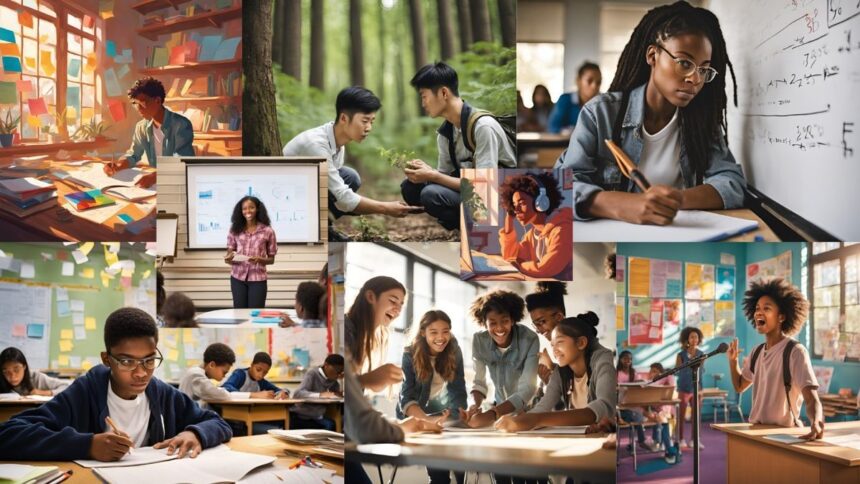
Learning is a journey, and every traveler has their own map. While some navigate through visuals, others rely on sounds or hands-on experiences to absorb information. The concept of learning styles helps us understand these unique pathways. By recognizing how we learn best, we can tailor our study habits and educational approaches for maximum effectiveness.
Imagine walking into a classroom filled with vibrant images, captivating audio clips, and engaging activities that invite you to participate. Wouldn’t it be exciting if education could adapt to fit your individual style? This blog post delves into the fascinating world of learning styles—exploring visual learners who thrive on imagery, auditory learners drawn to sound, kinesthetic learners who prefer active participation, and those who embrace multiple methods at once.
Join us as we uncover the characteristics of each type and discover strategies that can enhance your or someone else’s learning experience!
Visual Learners: Characteristics and Strategies
Visual learners thrive on imagery. They grasp concepts better when they can see them represented visually. Charts, diagrams, and videos resonate deeply with this type of learner.
These individuals often have a keen eye for detail. They remember faces more than names and can easily recall information presented in vivid formats. Colorful notes or mind maps help reinforce their understanding.
To support visual learners, incorporating visuals into study materials is crucial. Infographics can break down complex ideas effectively. Using color coding in notes enhances retention as well.
Encouraging the use of tools like flashcards allows these learners to visualize connections between concepts. Engaging in discussions while referring to images can also enhance comprehension significantly.
For visual learners, creating a stimulating environment filled with posters or relevant artwork may boost motivation and focus during study sessions.
Auditory Learners: Characteristics and Strategies
Auditory learners thrive on sound. They grasp information best through listening rather than reading or watching. If you often find yourself tuning into lectures or podcasts, this might be your style.
These individuals tend to excel in environments where discussion and verbal communication are key. They remember details from conversations and can easily recall information shared aloud.
To enhance learning, auditory learners can use strategies like recording lectures for later review. Participating in group discussions also helps solidify concepts through dialogue.
Listening to music while studying may aid concentration for some as well. Additionally, repeating information out loud can boost retention significantly.
Creating rhymes or songs about the material is another effective approach. This method turns dry facts into catchy tunes that stick with them long after the study session ends.
Kinesthetic Learners: Characteristics and Strategies
Kinesthetic learners thrive on movement and hands-on experiences. They grasp concepts better when they can touch, manipulate, or act out ideas. If you’ve ever seen someone doodling during a lecture, chances are they’re tapping into their kinesthetic style.
These learners often excel in physical activities like sports or dance. They gravitate towards tasks that allow for active participation rather than passive observation. This might include building models, conducting experiments, or role-playing scenarios.
To support kinesthetic learning at home or in the classroom, incorporate activities that engage the body. Use interactive games to reinforce lessons. Encourage them to take frequent breaks during study sessions to stretch or move around.
Incorporating tools such as manipulatives can also be helpful. Simple items like blocks or clay provide tangible ways to explore abstract concepts while keeping engagement high.
Multimodal Learning: Combining Different Styles
Multimodal learning embraces the idea that individuals can benefit from various educational methods. This approach recognizes that no single style fits everyone perfectly.
By combining visual, auditory, and kinesthetic strategies, learners can enhance their understanding and retention of information. For instance, a student might watch a video to grasp concepts visually while simultaneously listening to an engaging podcast on the same topic.
Incorporating different styles fosters creativity and keeps engagement high. It allows students to switch perspectives, making learning more dynamic.
Educators can craft lessons that appeal to multiple senses. Activities may include group discussions followed by hands-on projects or interactive presentations with visuals.
This blend not only caters to diverse preferences but also prepares learners for real-world scenarios where adaptability is key. Embracing multimodal techniques creates a richer educational experience for all involved.
The Importance of Identifying Your Learning Style
Understanding your learning style is crucial for effective education. It allows you to tailor your study habits and techniques, making the process more enjoyable and productive.
When you know how you learn best, you can select resources that resonate with you. Visual aids might be ideal for some, while others may find podcasts or hands-on activities more engaging.
Identifying your learning preferences also fosters confidence. When students recognize their unique strengths, they are more likely to participate actively in their own education.
Moreover, it helps educators customize their teaching methods. An awareness of diverse learning styles leads to a richer classroom experience where everyone has an opportunity to thrive.
Embracing these differences nurtures growth not just academically but personally as well. Each individual’s journey becomes meaningful when aligned with their inherent ways of understanding the world around them.
Implementing Different Approaches in Education
Diverse learning styles require varied teaching methods. Educators can enhance engagement by incorporating visual aids, auditory resources, and hands-on activities.
For instance, using diagrams or videos captures the attention of visual learners effectively. These tools make complex concepts more accessible.
Auditory learners benefit from discussions and lectures that stimulate their listening skills. Group work encourages sharing ideas and enhances understanding through conversation.
Kinesthetic learners thrive in active environments where they can experiment and interact. Simple activities like role-playing or building models bring lessons to life for them.
Multimodal approaches also hold significant value. Blending techniques caters to all types of learners in a single lesson, promoting inclusivity.
Adapting strategies not only supports student engagement but also fosters a deeper grasp of the material across different subjects. It’s essential for educators to remain flexible and responsive to students’ needs as they navigate various educational landscapes.
Conclusion
Understanding different learning styles is essential for anyone looking to optimize their educational experience. Recognizing whether you are a visual, auditory, kinesthetic, or multimodal learner can significantly enhance how you absorb information.
Implementing tailored strategies that align with your unique preferences can lead to more effective study habits and improved retention of knowledge. Education isn’t one-size-fits-all; it’s about finding what works best for you.
By embracing diverse learning approaches, both educators and students can foster an environment where everyone has the opportunity to thrive. Whether you’re teaching or learning, being adaptable opens doors to better understanding and growth in any subject matter. Take the time to explore these styles and see how they influence your journey through education. It’s all about making learning engaging and enjoyable while achieving academic success!