

Automotive product design requires a balance between appearance, durability, and practical maintenance. Fasteners influence all three. Although screws and clips remain common, magnetic connections offer another approach for components that need secure positioning and convenient removal.
Magnetic fastening is especially relevant to accessories—such as a magnetic license plate holder—where visible hardware would interfere with a clean design.
Why Engineers Consider Magnetic Fasteners
Traditional fasteners create mechanical connections through threads, clips, or other locking features. Magnetic systems instead use attractive forces between compatible components.
Permanent magnets can maintain their holding force without a continuous power supply. They also allow repeated attachment and removal without loosening threaded hardware.
However, magnets are not suitable for every connection. Their performance depends on load direction, surface alignment, and the distance between mating parts.
Magnetic Mounting and Exterior Design
Exterior accessories benefit from mounting systems that minimize visible brackets and borders.
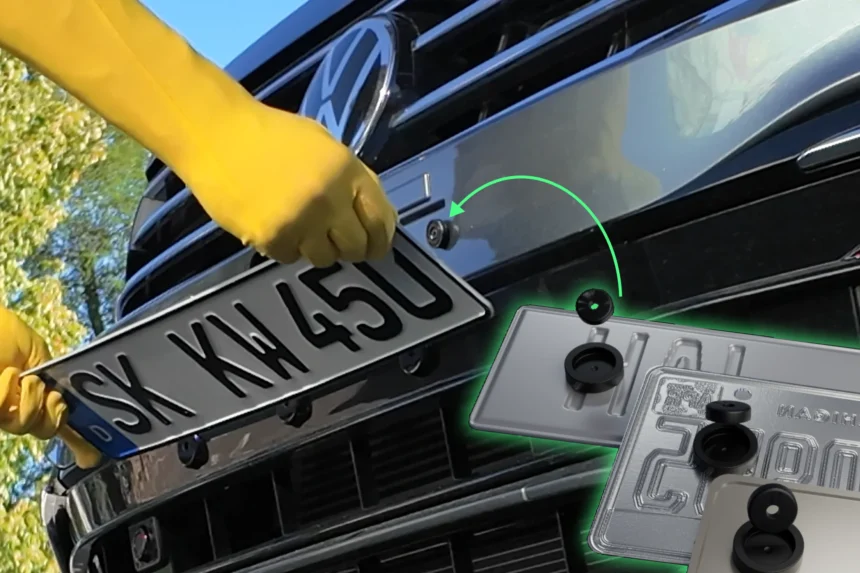
A magnetic license plate holder illustrates this design approach. Alite Maglock 2.0 uses concealed magnetic components to attach a registration plate without a conventional surrounding frame.
The mounting hardware remains behind the plate, creating a cleaner exterior appearance. The removable connection also makes it easier to access the mounting area during cleaning.
This combination of visual simplicity and practical access explains why magnetic fastening attracts attention in accessory development.
Engineering Factors Behind a Reliable Connection
Designers must evaluate more than the advertised strength of a magnet.
Important considerations include:
- Holding force: The attraction available under the intended installation conditions.
- Shear resistance: The connection’s ability to resist sideways movement.
- Contact distance: Gaps and protective layers that influence magnetic attraction.
- Load distribution: The placement of multiple attachment points.
- Material compatibility: The response of mounting surfaces to magnetic fields.
- Environmental resistance: Protection against moisture, corrosion, and temperature changes.
These factors interact. A strong magnet may provide limited practical retention if the mounting surface is uneven or the load acts primarily sideways.
Testing should therefore reproduce the forces and environmental conditions expected during use.
The Importance of Material Selection
Magnetic fasteners often combine magnets, metal components, adhesives, and protective coatings.
Each material contributes a different function. Magnets generate attraction, structural elements support the assembly, and coatings help protect exposed surfaces.
Adhesive-backed components require particular attention to surface preparation. Contamination or poor alignment can weaken the installation even when the magnets themselves remain effective.
Engineers also consider how repeated removal affects protective layers and surrounding materials.
Design for Maintenance and Repeated Use
Removable connections can simplify routine maintenance. Components may be detached for cleaning, inspection, or replacement without dismantling a larger assembly.
This convenience is valuable only when the mounting system maintains predictable performance after repeated use.
Designers therefore examine wear, positioning accuracy, and the condition of contact surfaces over time.
Conclusion
Magnetic fasteners offer automotive designers a way to combine discreet mounting with convenient access. Their effectiveness depends on careful engineering rather than magnetic strength alone.
Products such as Alite Maglock demonstrate how concealed attachment can support a minimalist exterior. Appropriate materials, load management, and installation quality remain essential to a dependable design.